
Last updated September 20, 2026
Full 25-point door and opener safety check with every visit - springs, cables, rollers, tracks, and your LiftMaster or Chamberlain opener included
You get a price before we start. It does not change when the truck arrives.
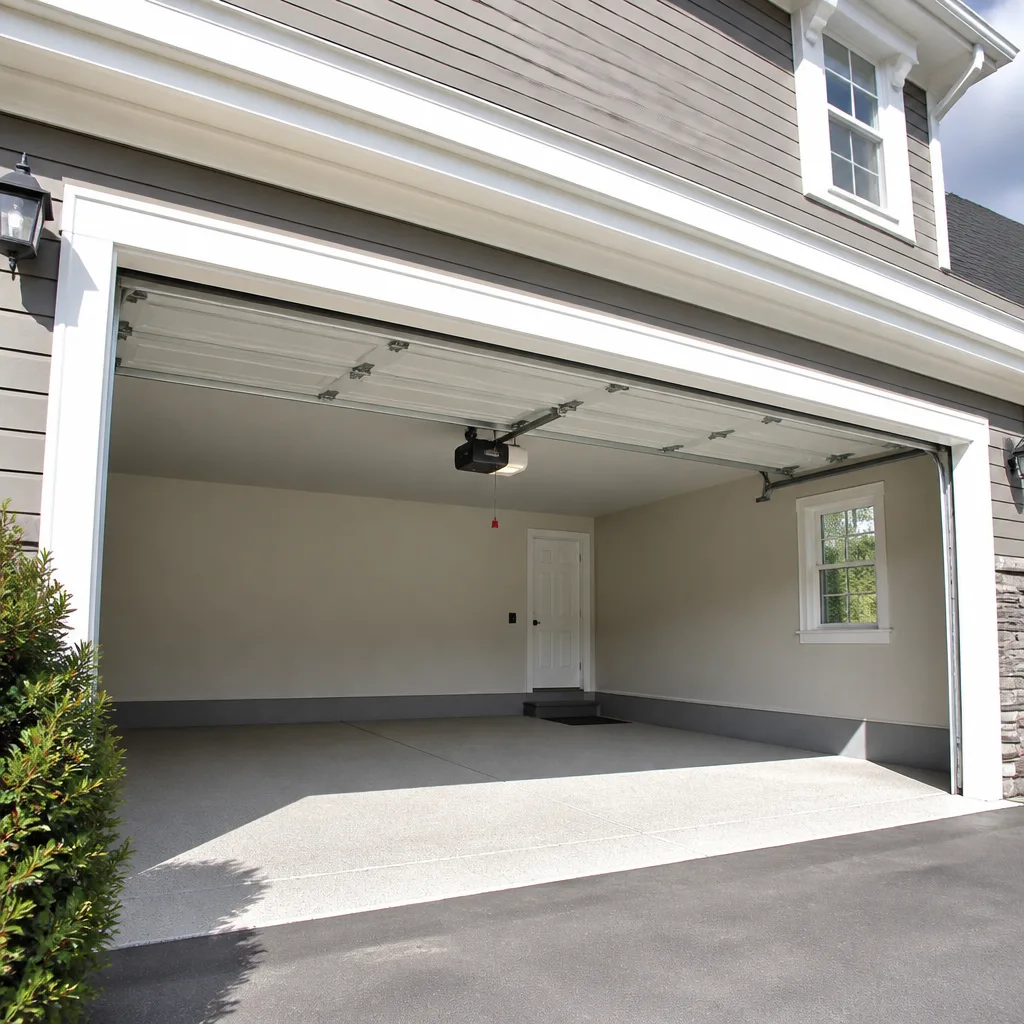
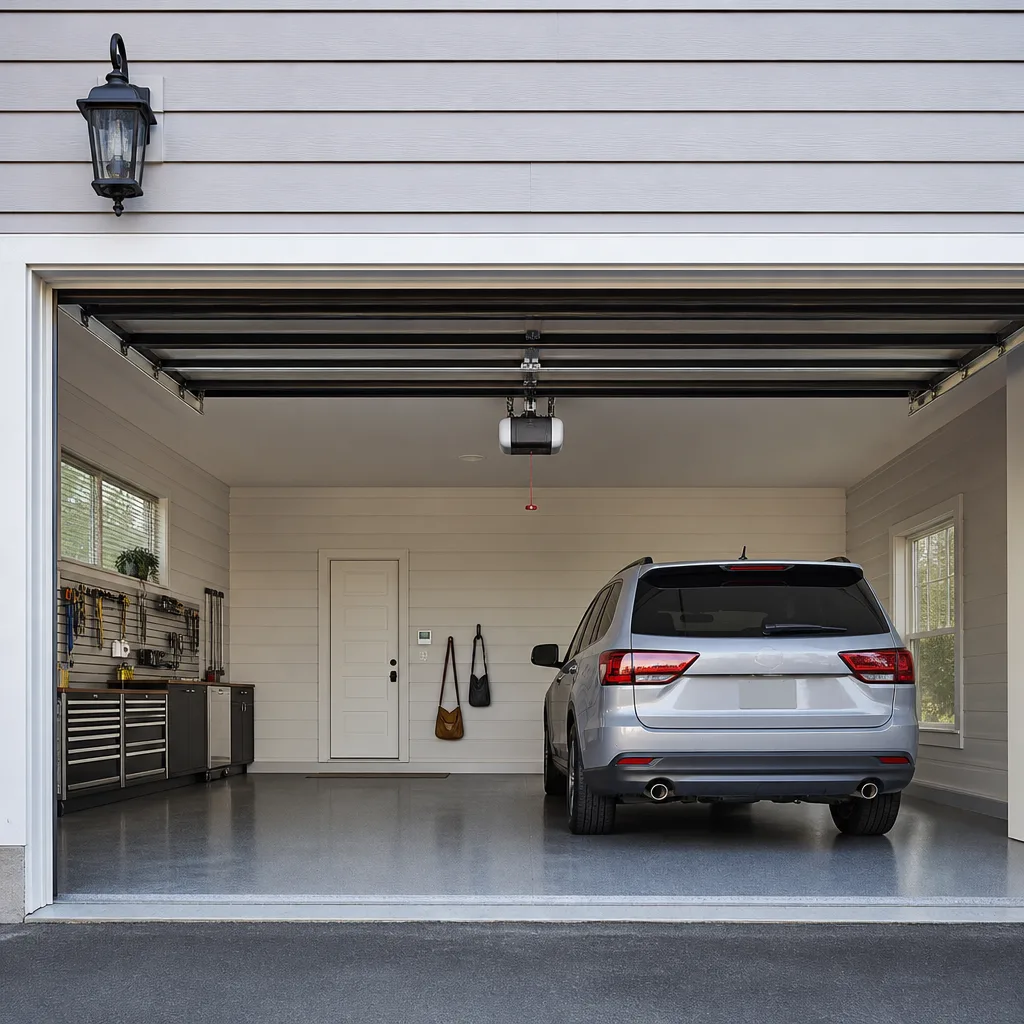
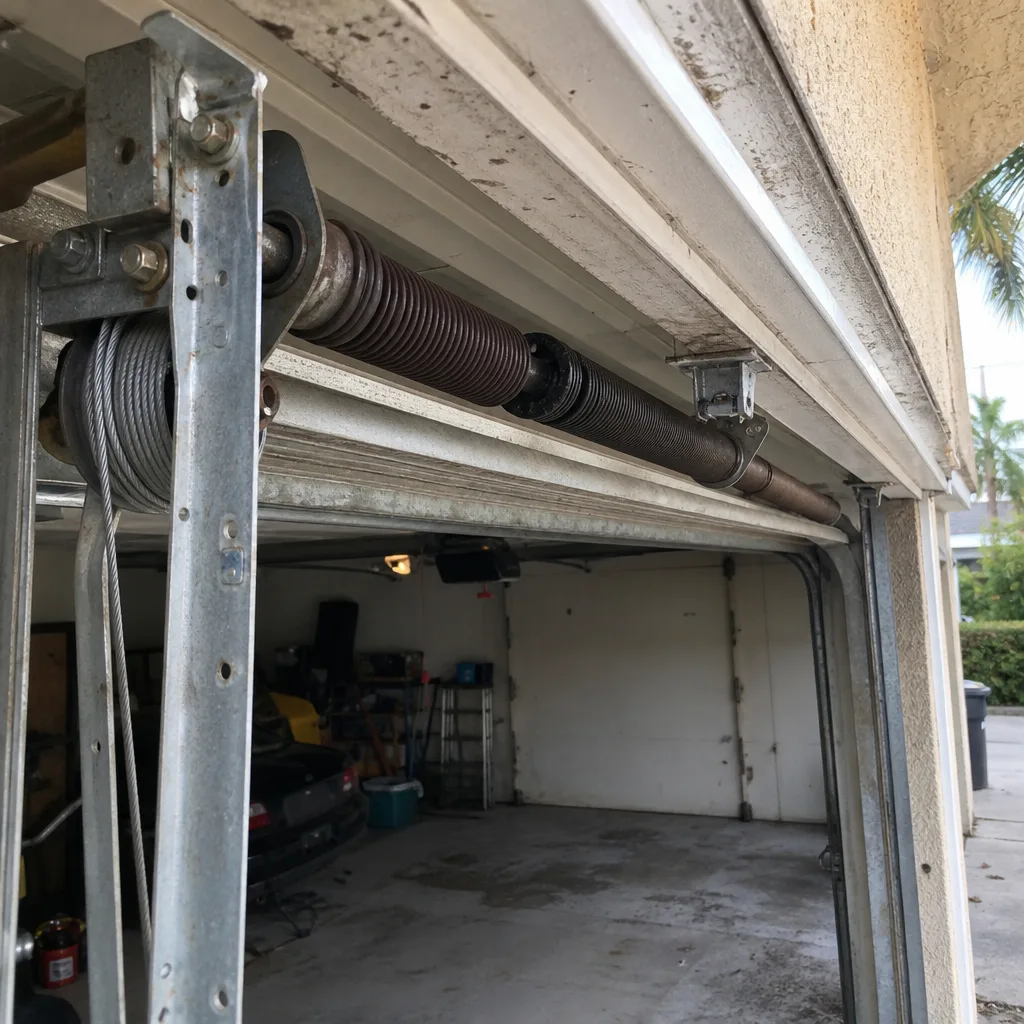 Before
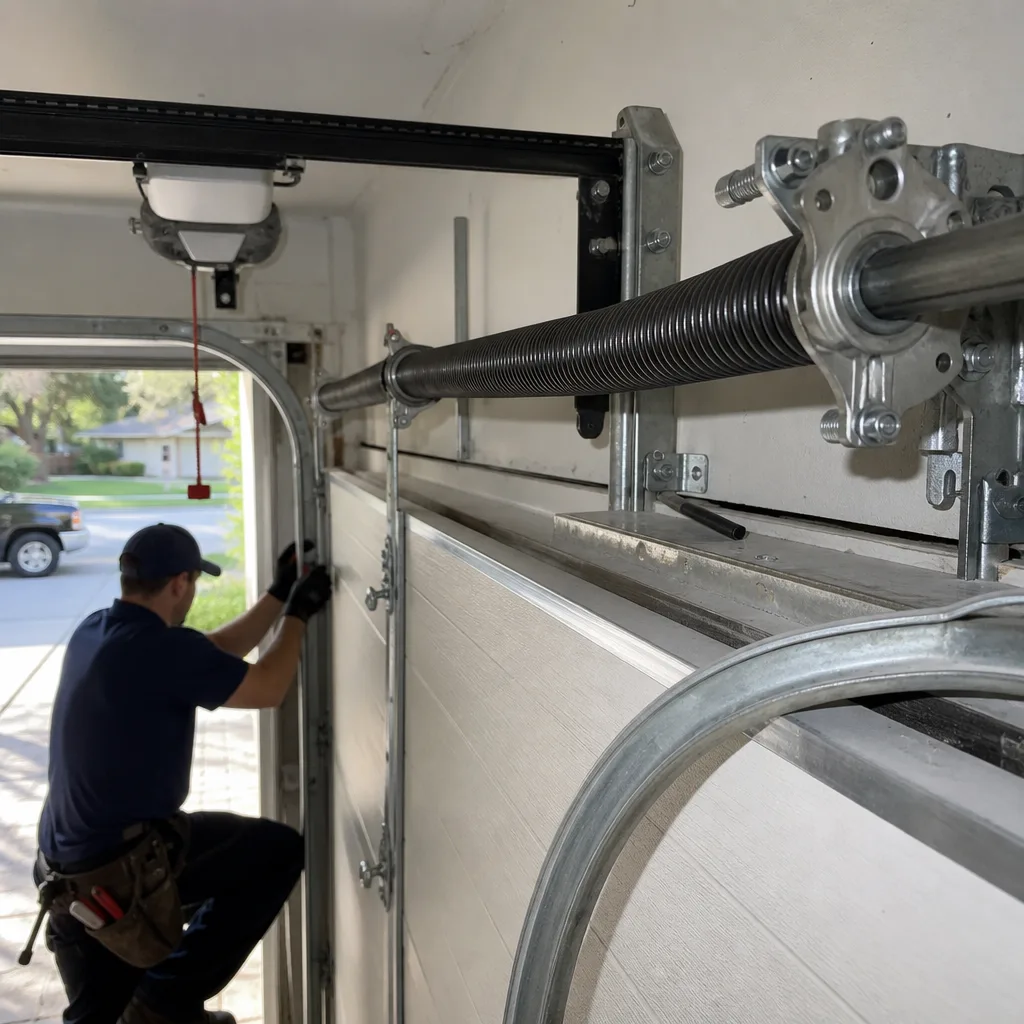 After
After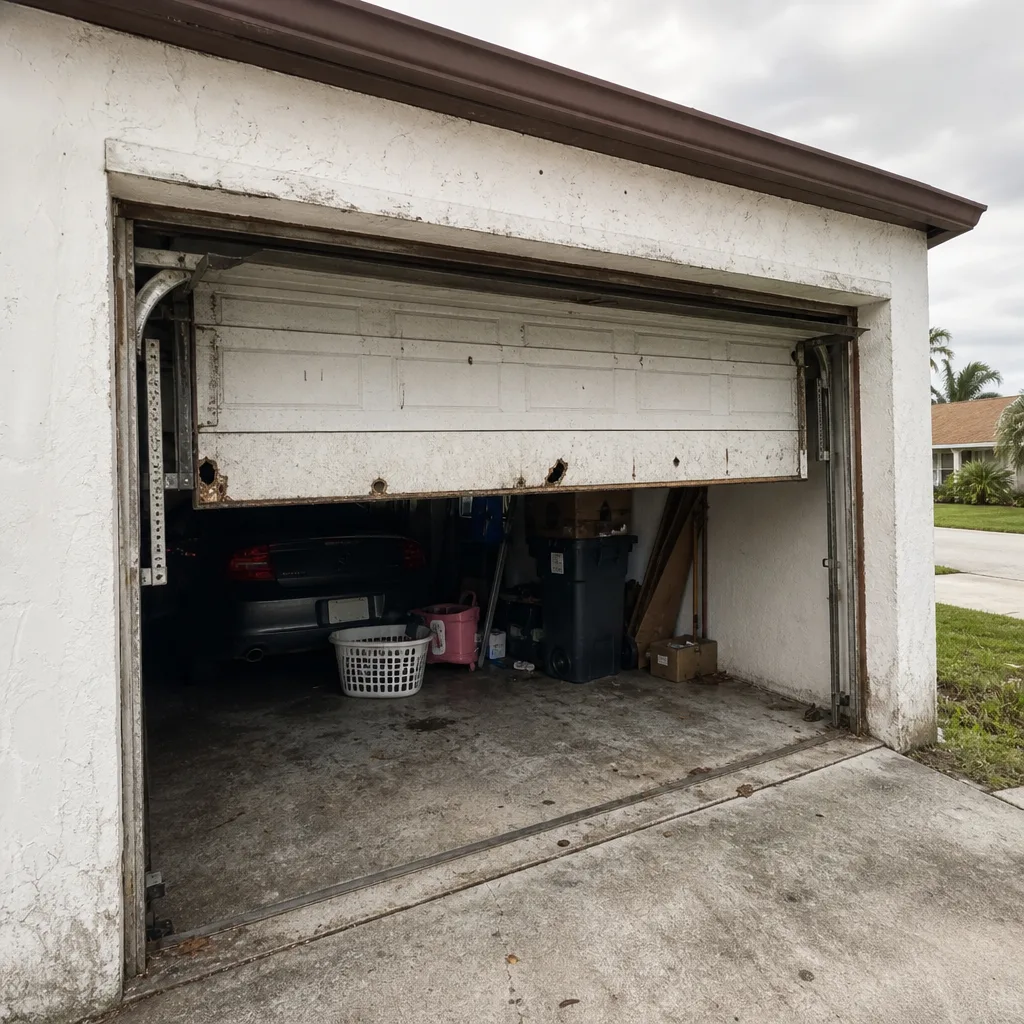 Before
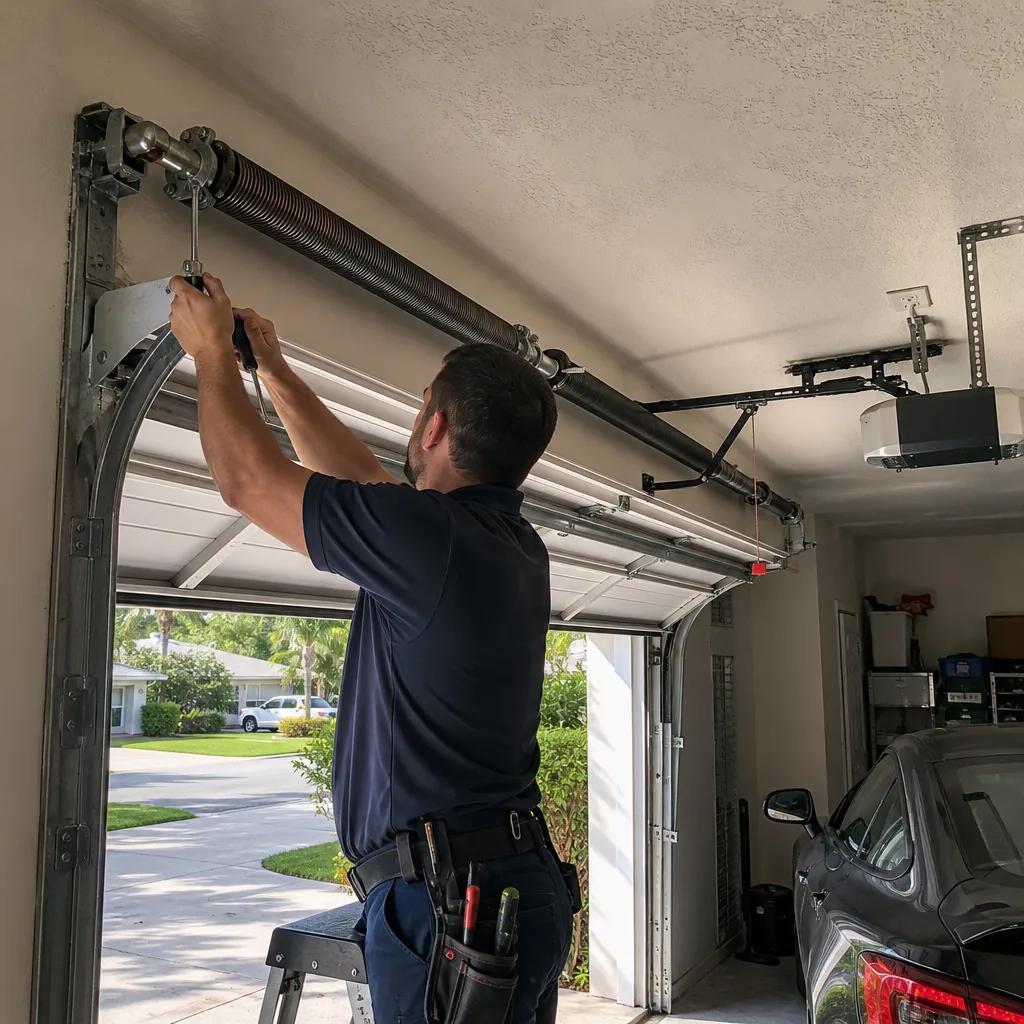 After
After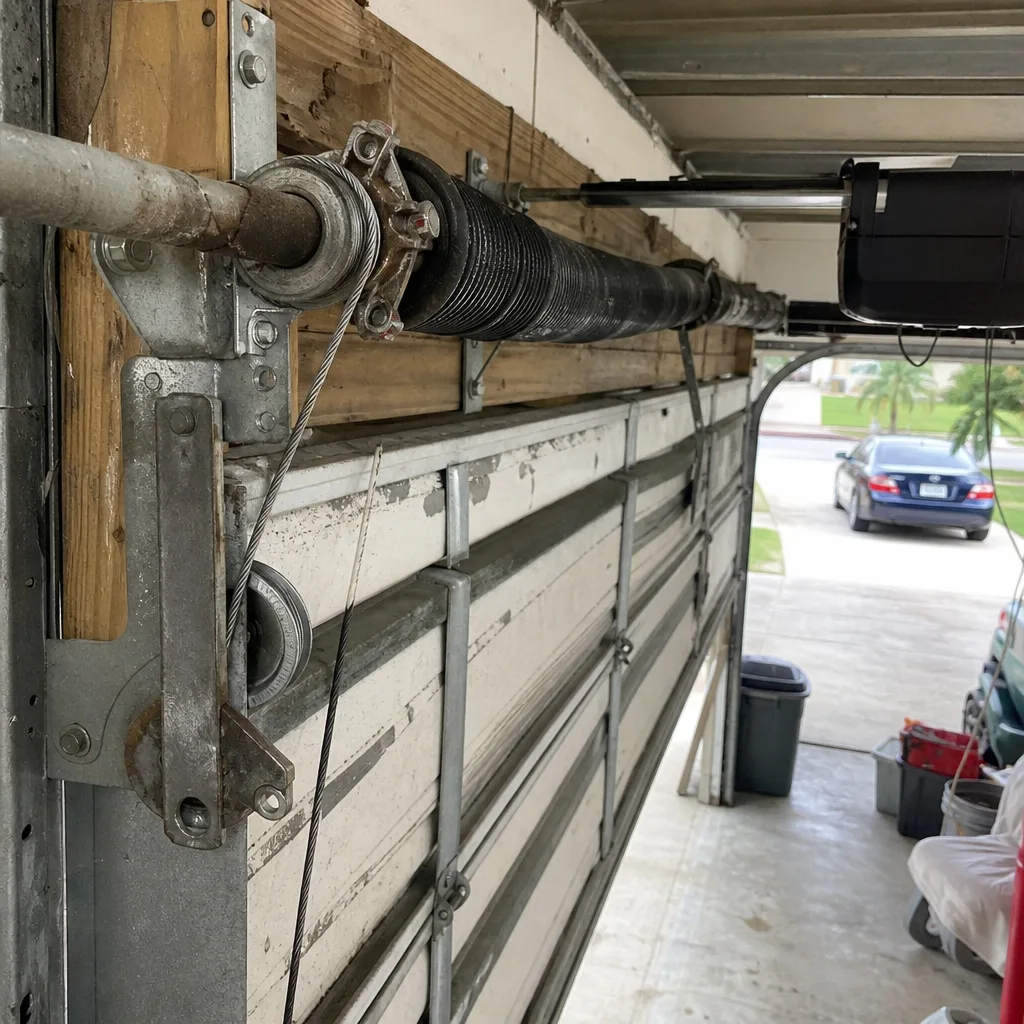 Before
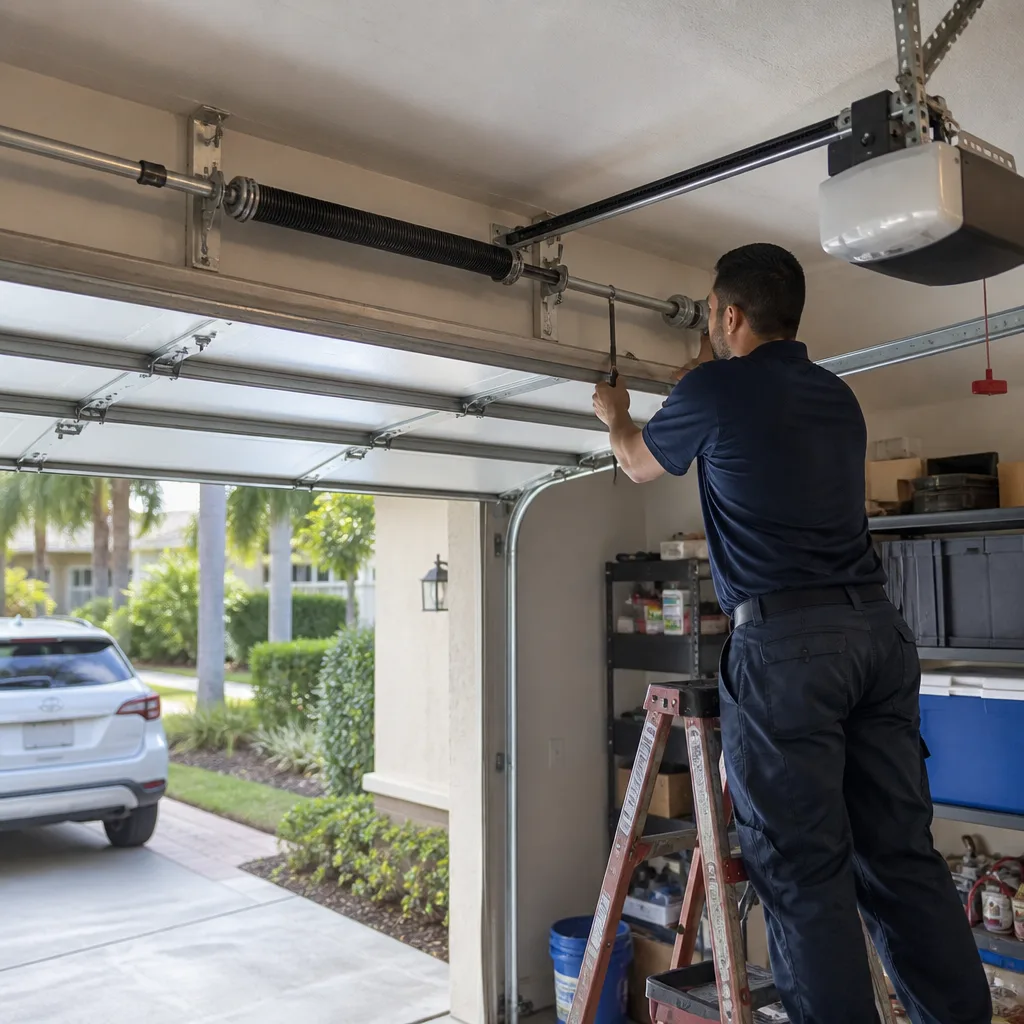 After
AfterSeasonal Garage Door Care for Hollywood: Year-Round Homeowner’s Guide
The month most Hollywood garage doors fail is October. Not August, when the big storms roll through. Not January, when northern cities freeze. October. And the reason isn’t hurricane damage, though that’s what most homeowners assume when a door stops working after a long storm season. The real cause is that hurricane-season humidity has been stressing every metal and rubber component for five straight months, and the deferred maintenance from last spring finally catches up. By October, the torsion spring that corroded slightly in June, the rollers that wore down through July’s heat, and the bottom seal that swelled in September all hit their limit at the same time. Our Complete Guide to Garage Door in Hollywood covers what to check in each of Hollywood’s two real operating environments: hurricane season and the dry winter months. If you own a single-family home in Hollywood, FL, this is the maintenance calendar that actually matches the weather outside your window.
Quick Answer
Seasonal garage door maintenance in Hollywood, FL means two distinct service windows: pre-hurricane-season hardening (March through April) and dry-season servicing (January through February). Most homeowners need a professional torsion spring tension check in spring, a named-component inspection after every major storm, and opener motor service during the dry months when humidity isn’t compounding the work; see our DIY vs Professional Garage Door guide for what you can safely handle yourself. Budget $150 to $300 annually for professional seasonal maintenance.
Table of Contents
- Hollywood’s Two Real Seasons, and What They Do to a Garage Door
- Pre-Season Hardening: March-April Checks That Decide Category 2 Survival
- In-Season Protocol: June-October, What to Inspect After Every Named Storm
- Post-Season Reset: November-December, Reversing Humidity Damage
- Dry-Season Service: January-February, the Right Window for Opener and Cable Work
- Torsion Spring Tension Verification: The One Task That Should Never Be DIY
- Common Mistakes to Avoid
- When to Call a Professional
- Frequently Asked Questions
- The Bottom Line
BeforeAfterHollywood’s Two Real Seasons, and What They Do to a Garage Door
Hollywood doesn’t get four seasons. A calendar borrowed from Atlanta or Charlotte is worse than useless here because it schedules maintenance for weather events that never arrive and skips the ones that do. What Hollywood actually gets is a wet season from roughly June through October, bracketed by a dry season from November through May. Each one stresses a garage door in specific, predictable ways.
Wet Season Stressors (June-October)
- Salt air and humidity: Hollywood sits directly on the Atlantic. That means salt-laden air works on exposed hardware year-round, but the effect multiplies during wet season when humidity rarely drops below 70%. Torsion springs develop surface rust, which creates friction points along the coil. Rollers wear faster on rusted tracks. Hinges grind.
- Wood swelling: If you have a wood or wood-composite door (common in Hollywood neighborhoods like Emerald Hills and Hollywood Lakes), the wet season swells the door panels. A door that cleared the jamb by half an inch in March may bind by August. Swollen doors put extra load on the opener motor and on the torsion springs.
- Bottom seal saturation: The rubber bottom seal (also called the astragal) absorbs moisture and can deform. Once it loses its shape, it stops sealing against the garage floor. That gap lets in rain water, insects, and in Hollywood’s case, the occasional street flood from a heavy afternoon thunderstorm.
- Opener electrical strain: Power surges during summer lightning storms are common in South Florida. A garage door opener without a functioning surge protector can lose its logic board, which is the printed circuit board that controls the opener’s travel limits and remote programming.
Dry Season Stressors (November-May)
- Thermal contraction: As temperatures moderate and humidity drops, wood doors contract. Hardware that was tight in October rattles in January. Screws back out slightly. Brackets shift.
- Dust accumulation: Dry season in Hollywood brings less rain but more dry airborne dust from construction and road traffic. Dust coats the opener’s optical safety sensors (the two photo-eye units near the floor), which can cause the door to falsely reverse or refuse to close.
- Lubricant evaporation: Rollers, hinges, and the torsion spring coil lose lubrication faster in dry, warm air. A door that was silent in September can start squeaking by December because the lubricant has thinned out.
- Cable fraying visibility: This is a benefit, not just a stressor. Dry-season light and lower humidity make it easier to visually inspect the lift cables for fraying or corrosion than during wet season, when everything is damp and the light is heavier.
We’ve been working on garage doors in Hollywood since 2015, and the pattern holds every year. The doors that get serviced in March and October are the ones that don’t fail at 11 p.m. the night before a hurricane watch. The doors that get ignored for 18 months are the ones that show up as emergency calls. There’s a reason for that, and it’s not bad luck.
Pre-Season Hardening: March-April Checks That Decide Category 2 Survival
Every year, right around March, the question shifts from “is my door working?” to “will my door survive if a named storm hits Hollywood this summer?” That’s the right question. A garage door is the single largest opening in most Hollywood homes, and if it fails during a hurricane, the wind pressure differential can blow out walls and lift roofs. The difference between a door that holds at 85 mph and one that fails at 110 mph is often whether the hardware was inspected and corrected in March.
Here’s the checklist we run on every Hollywood pre-season call:
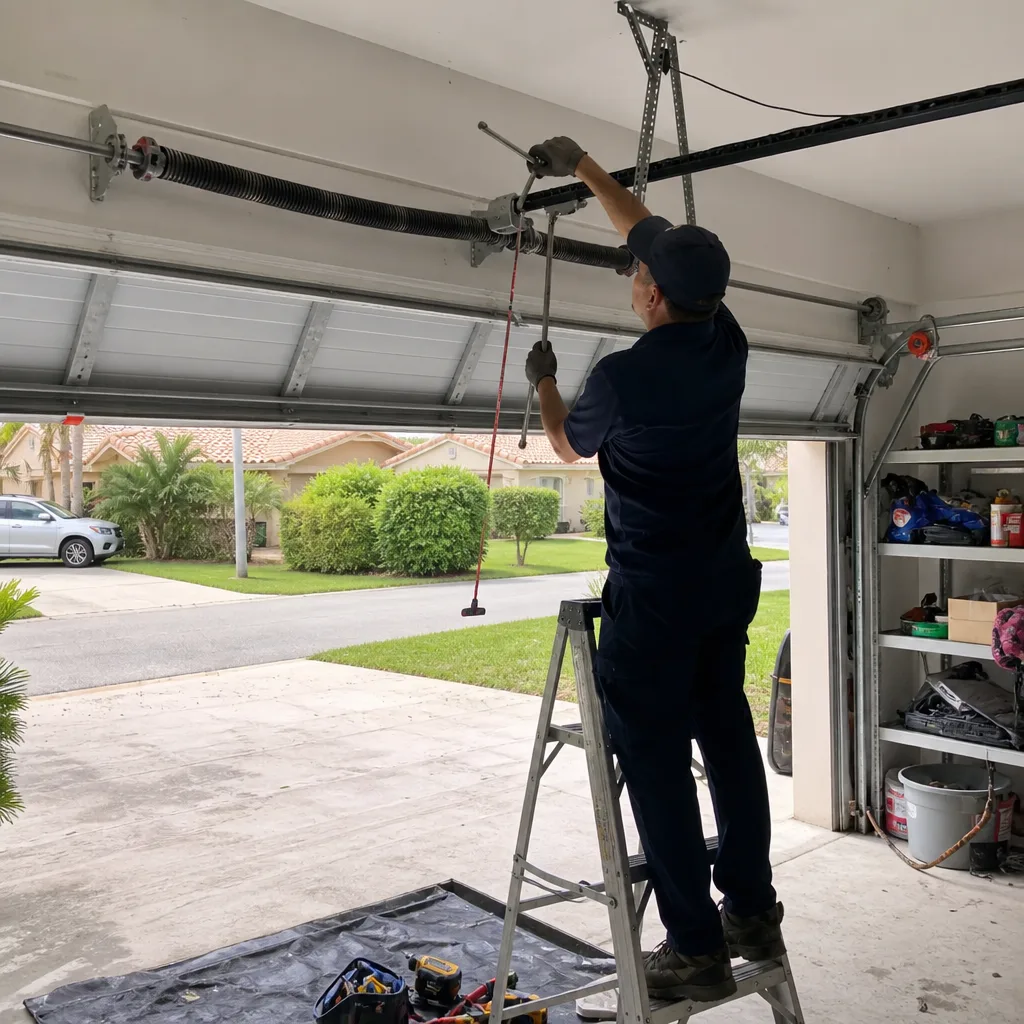
- Inspect the torsion spring for corrosion and fatigue. This is the large spring mounted above the door. We measure wire diameter with a caliper, check for rust pitting, and verify the spring’s cycle rating against the door’s weight. In Hollywood’s salt air, a spring with surface rust is common. A spring with pitting or a visible gap in the coil at the winding cone is a failure waiting for a wind load.
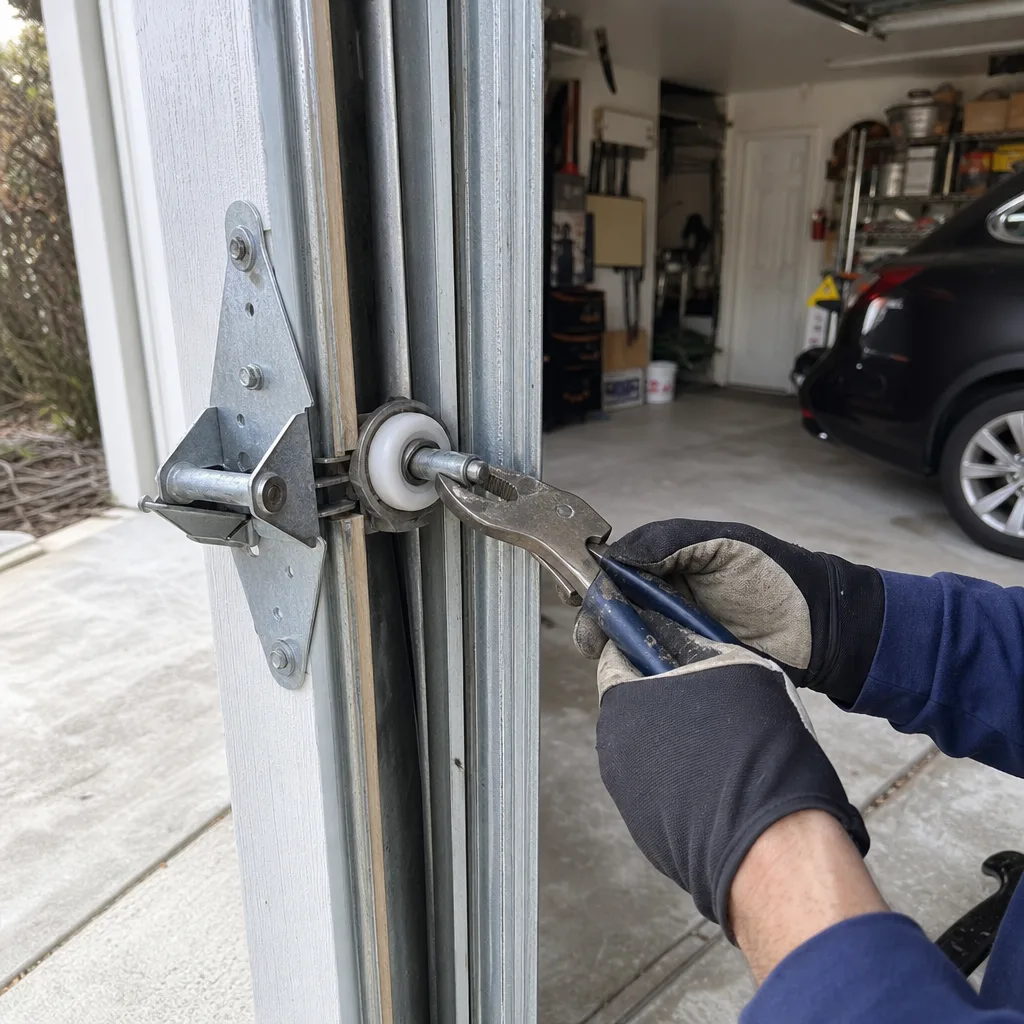
- Verify the door’s vertical track alignment. A track that’s out of true by even a quarter inch makes the door resist movement. During a hurricane, that resistance translates to additional lateral load on the structure. We check the track with a level and adjust the mounting brackets.
- Tighten every hinge, bracket, and bolt. The constant vibration of daily open-close cycles, combined with humidity expansion and contraction, loosens hardware. A loose hinge on an 18-foot-wide door amplifies the door’s wind flex. Every fastener gets checked.
- Test the opener’s force settings. After a winter of temperature swings, the opener may have increased force to compensate for a stiff door. That’s not good for the door or for safety. We reset the force so the door stops when it encounters resistance, which matters during storm season when the door should not fight the wind.
- Check the reinforcing struts and hurricane bracing. If your door was installed before 2002, it may not have the reinforcement required for current Florida building code wind loads in Hollywood. We can inspect for truss-style reinforcement and advise whether adding a strut is worth it for your specific door and exposure.
One thing to know about Hollywood specifically: the eastern sections of the city, from Hollywood Beach west to about US-1, get notably more wind exposure than the western residential areas near 441. If your home is east of US-1, you should treat pre-season hardening as non-negotiable. The same door in Emerald Hills and in Hollywood Lakes faces different wind loads, and the difference matters when the National Hurricane Center names a storm.
This is also the right window to address any issue found during the previous dry season. If the opener motor was making a grinding sound in January but you deferred it, March is when you fix it, not August. A garage door opener repair in Hollywood is a one-hour job in March. In August, during a storm watch, it’s a different conversation. If the door itself needs more than maintenance, garage door repair in Hollywood has the same seasonal logic: schedule it before the rain starts, not during it.
In-Season Protocol: June-October, What to Inspect After Every Named Storm
Once hurricane season starts, the maintenance question changes. You’re no longer doing preventive work. You’re doing verification. After every named storm passes near Hollywood, even if your door looks fine from the street, there’s a short list of components to check. We’re not talking about vague “inspect for damage” advice. We’re talking about named components, each with a specific failure mode.
The Post-Storm Component Checklist
- Lift cables: The two steel cables that run along each side of the door and connect to the bottom brackets. They carry the door’s weight. After high winds, check for fraying (individual strands separating), kinks, or rust at the bottom bracket connection. A frayed cable that snaps under load sends the door off-track and can cause serious injury. If you see fraying, stop using the door and call a professional.
- Rollers: The wheels that ride inside the vertical and horizontal tracks. After a storm, rollers can develop flat spots or crack, especially nylon rollers that took repeated wind buffeting. A roller with a cracked wheel can jump the track, which usually happens when the door is halfway up and under tension.
- Bottom seal: Check whether water came under the door during the storm. If the garage floor was wet along the front edge, the bottom seal saturated, deformed, or was pushed out of its channel by wind-driven rain. A saturated seal won’t recover. It needs replacement.
- Track fasteners: Wind vibration works on the bolts and brackets that hold the vertical and horizontal track to the wall and ceiling. If a track bracket pulled loose, you’ll see daylight between the bracket and the wall. This is a 10-minute fix with a socket wrench, but it won’t fix itself.
- Opener photo-eye alignment: Storm vibration can knock the optical safety sensors out of alignment. If your door starts closing and then reverses for no reason, the photo-eyes are the first thing to check. Clean the lenses with a dry cloth and verify the alignment.
- Extension spring safety cables: If you have an older door with extension springs (the long springs that run above the horizontal tracks), check that the safety cables run through the center of each spring. If a spring breaks without a safety cable, the broken half can become a projectile. In Hollywood, most doors installed since 2000 use torsion springs, but older Hollywood Hills and Emerald Hills homes sometimes still have extension springs.
One note from our experience in Hollywood: after a storm, the most common call we get is “my door is making a loud noise.” Nine times out of ten, it’s a roller that developed a flat spot or a loose track bolt. Both are quick fixes when caught early. Both become bigger problems if the door keeps running with the damaged part. If you live near Hollywood Boulevard or the Lakes area, salt air is already working on those components before the storm even arrives. After the storm, they need a look.
During the wet season, we also see a spike in garage door opener failures tied to power surges. A direct or nearby lightning strike can take out the logic board even if the motor is fine. The fix is replacing the board, not the whole opener, and it’s a job that takes about an hour. If your opener went dead after a storm and the manual release still works, the board is the likely culprit.
Post-Season Reset: November-December, Reversing Humidity Damage
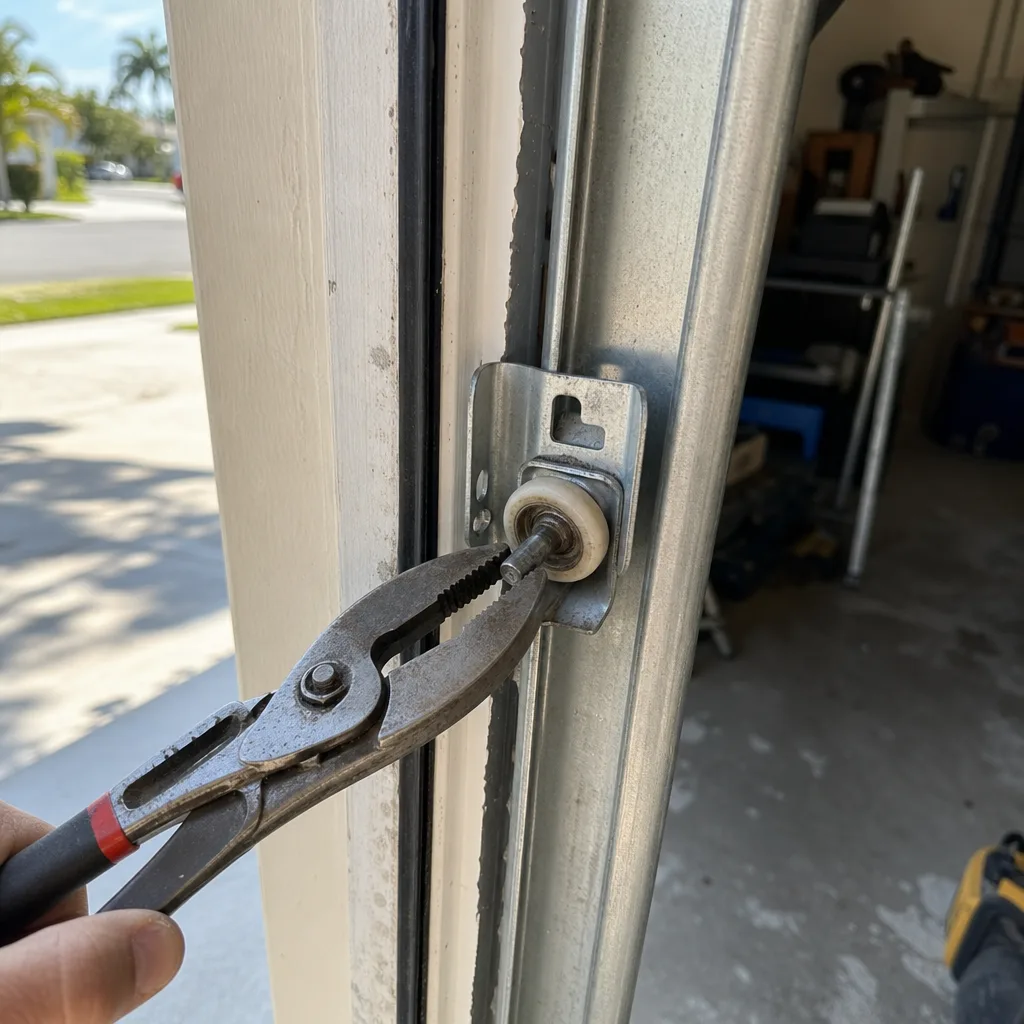
By late October, the air in Hollywood starts to dry out. The first cold fronts push through, humidity drops from the mid-80s to the mid-60s, and the garage door components that swelled during summer begin to contract. This is the reset window, and it’s the most underrated maintenance period in Hollywood. Two specific jobs matter here.
Job 1: Bottom Seal Replacement
If your bottom seal absorbed moisture during the wet season and deformed, the dry-season air won’t fix it. A deformed seal stays deformed. But November and December are the right time to replace it because the new seal won’t immediately saturate with humidity. The seal slides into a channel at the bottom of the door panel. On most Hollywood doors, it’s a 20-minute replacement with the right-sized seal. On a wood door that has swelled permanently, the channel itself may need to be cleaned out or the panel may need shaving, which is a professional job. A proper bottom seal matters in Hollywood because it keeps out not just rain but also the insects that thrive in wet-season conditions and migrate indoors when dry-season temperatures cool.
Job 2: Spring Re-Tensioning
This one surprises homeowners. Torsion springs don’t stretch from use; they fatigue from cycling. But the door’s effective weight changes with humidity, and that changes the load on the spring. During the Hollywood wet season, a wood door can gain 15 to 20 pounds from absorbed moisture. The spring, sized for the door’s dry weight, is under additional load for five months. When the dry season arrives and the door loses that moisture weight, the spring tension may no longer match the door’s actual weight. The symptom is a door that feels heavy at the handle or an opener that strains. The fix is a torque adjustment on the torsion spring, which means winding the spring tighter or looser to match the door’s current weight. This is a set torque specification, not a visual judgment call, and it’s a professional task for a reason. We cover that in the torsion spring section below.
November is also when we recommend scheduling any deferred repair that accumulated during the wet season. If your door survived a storm or two but the opener was acting up, or the rollers were grinding, post-season is the time to address it. The weather is cooler, the humidity is dropping, and parts are operating under less stress, which means repairs are more likely to hold. The garage door experts at Servo see November as a second spring in Hollywood, because the maintenance logic is similar: fix the small problems before the next season compounds them.
Dry-Season Service: January-February, the Right Window for Opener and Cable Work
If Hollywood has a “best time of year” for garage door work, it’s January and February. The humidity is at its lowest, which means metal parts don’t rust as fast after you touch them, lubricants stay where you put them, and wood doors are at their driest weight. This is the window for two specific jobs: opener motor service and cable inspection.
Why Opener Service Belongs in the Dry Season
A garage door opener is an electromechanical device. The motor has brushes that wear, a belt or chain that stretches, and a logic board that doesn’t like moisture. During the Hollywood wet season, the opener runs in humid, salt-laden air, and any exposed metal inside the unit corrodes slightly faster than it would in a drier climate. By January, the humidity has dropped far enough that the opener is operating in its least-stressed environment of the year. That makes it the best time to:
- Inspect and clean the motor housing. Dust and salt residue build up over the year. A wipedown and a check for corrosion on the motor contacts takes 10 minutes.
- Check belt or chain tension. Belts stretch slightly over time. A belt that’s too loose slips on the drive gear and makes the door move erratically. A chain that’s too tight wears the sprocket. Both are adjustable.
- Test the force and travel limits. The opener should reverse when it hits resistance and stop in the correct down position. After a year of humidity changes and temperature swings, these settings drift. We reset them so the door closes flush without slamming.
- Verify the surge protector. January in Hollywood has fewer lightning storms than summer, but the opener’s surge protection still needs to be functional before the next wet season. We check it during dry-season service.
- Incorrect winding count: Too few turns, and the door is heavy at the handle and the opener strains. Too many turns, and the door flies up and the spring is over-stressed, reducing its cycle life.
- Uncontrolled release: The winding cone has to be held under tension while set screws are tightened. If the winding bar slips, the spring unwinds instantly, and the bar becomes a projectile. We’ve seen the result of that a few times. It’s not something anyone should experience.
- Unknown fatigue state: A spring that’s been through five Hollywood hurricane seasons looks different from a new spring, and that matters. A fatigued spring that gets re-tensioned can fail without warning. Only a trained eye can tell the difference between surface rust and fatigue pitting.
- Following a calendar written for another climate. A maintenance guide from New Jersey tells you to winterize in October and “spring clean” in April. Hollywood’s October is the tail of the wet season. The real service windows are March-April and January-February. Following the wrong calendar means scheduling work when conditions are worst for it.
- Lubricating the wrong parts. We see homeowners spraying WD-40 on garage door tracks and thinking they’ve done maintenance. Tracks don’t need lubrication; rollers and hinges do. And WD-40 is a solvent, not a lubricant. Use a silicone or lithium-based lubricant on rollers, hinges, and the torsion spring coil. Never lubricate the track. It just collects dust.
- Ignoring a noisy door because it still works. A door that squeals or grinds is telling you a component is failing. In Hollywood’s salt air, a grinding roller doesn’t heal. It wears through, then the wheel collapses, then the door jams in the open or closed position. Noise is the early warning. Early is cheaper.
- Replacing the opener when the issue is the door. If the door is heavy at the handle, the problem is the spring or the track or the rollers, not the opener motor. Replacing the opener while the door still binds just transfers the problem to a new motor. Diagnose the door first.
- Deferring the pre-season inspection until a storm is already named. In Hollywood, by the time a storm is in the Gulf and heading toward the Atlantic coast, every garage door company in the city is booked. The time to harden your door is March and April, when there’s no storm on the radar and you control the schedule.
- Assuming a new house means a maintenance-free door. Homes built in Hollywood after 2015 often have new garage doors, but that doesn’t mean the door was installed correctly or that the components are exempt from salt-air corrosion. We service doors in new construction neighborhoods around West Lake and South Hollywood where the hardware is rusting by year three because of exposure. New doesn’t mean immune.
If your opener is more than 12 years old and has been running through Hollywood humidity for that entire time, January is also the right time to evaluate replacement rather than repair. A garage door opener replacement in Hollywood is a straightforward, scheduled job. It’s not an emergency. And scheduling it in February means your new opener’s first summer isn’t spent fighting the highest humidity of the year.
Cable Inspection
The lift cables work every time the door moves, and in Hollywood they live in salt air. During the wet season, they accumulate surface rust, especially at the bottom bracket where water drips off the door panel. By January, the dry air makes any rust or fraying much more visible than in August. This is the right time to look closely at both cables, the full length of each one, with a flashlight. If you see rust staining on the cable but no broken strands, a cleaning and lubrication may be enough. If you see broken strands, the cable is compromised and should be replaced before the next wind event. Cable replacement is not a DIY job. The cables are under tension from the torsion spring, and a mistake can send the spring unwinding at speed.
Dry-season service in Hollywood is also a good time to address any cosmetic or structural issues on the door face itself. If rust is showing through the paint on a steel door, the dry season is the right time to sand, prime, and repaint. If wood panels developed cracks during the wet season, the dry season is when they’re most stable for repair. Every year we see homeowners in Hollywood skip January and February service and then call in August with a list of things that were visible in January. The price of that delay is real, and it’s not small-our Garage Door Cost Breakdown for 2026 shows what deferred maintenance typically adds.
Torsion Spring Tension Verification: The One Task That Should Never Be DIY
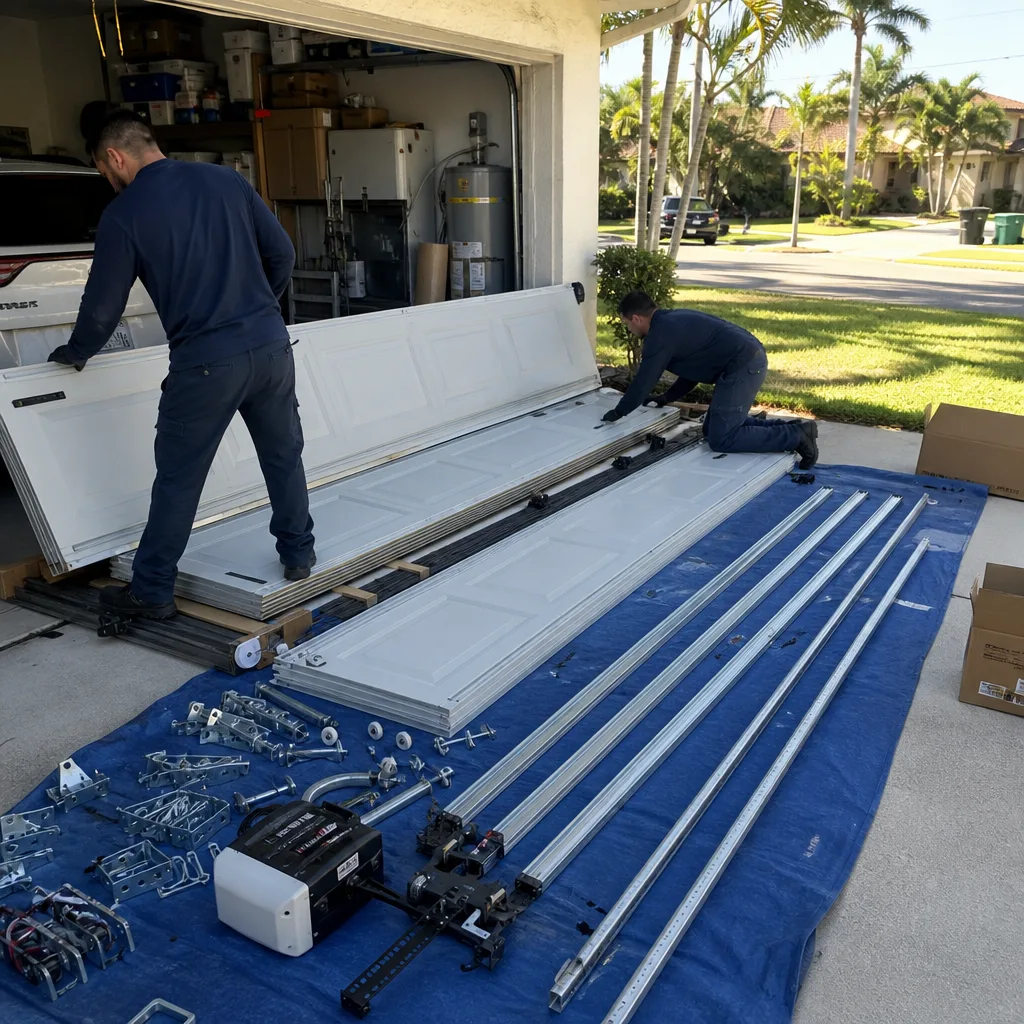
There’s one garage door component that accounts for more injuries than all the others combined: the torsion spring. It’s the large spring mounted horizontally above the door opening, and it holds the stored energy that makes a 150-pound door feel like 20 pounds when you lift it. That spring is under enormous tension at all times. When it releases that tension suddenly, the consequences can be fatal.
We’re not going to write a paragraph about how to adjust a torsion spring yourself, because it shouldn’t be done. But we can explain why it exists, what the adjustment actually is, and why it’s a torque specification rather than a visual judgment.
A torsion spring is engineered with a specific wire diameter, coil length, and inside diameter to deliver a specific torque to the door. On a standard residential Hollywood door, a spring might be rated for 10,000 cycles, meaning it’s designed to open and close 10,000 times before it fails. When a technician adjusts a spring, they’re adding or subtracting winding turns to change the torque delivered to the door. The number of turns isn’t guesswork. It’s calculated from the door’s weight, height, track radius, and spring dimensions. Setting it correctly requires a torque wrench, winding bars designed for the spring’s cone size, and the knowledge to read a spring’s cycle rating against its current condition.
Here’s what goes wrong when people try it themselves:
The correct annual routine for torsion springs in Hollywood is simple: have them inspected once a year, preferably in March before hurricane season, by someone who can measure the wire diameter, check for pitting, verify the torque setting, and tell you how many cycles the spring has left. We do this on every pre-season call. The inspection takes about 15 minutes and tells us, and you, whether the spring is fine or whether it needs replacement before the next storm load hits. In Hollywood, that’s the difference between a door that opens on a Tuesday morning in August and a door that doesn’t.
Common Mistakes to Avoid
When to Call a Professional
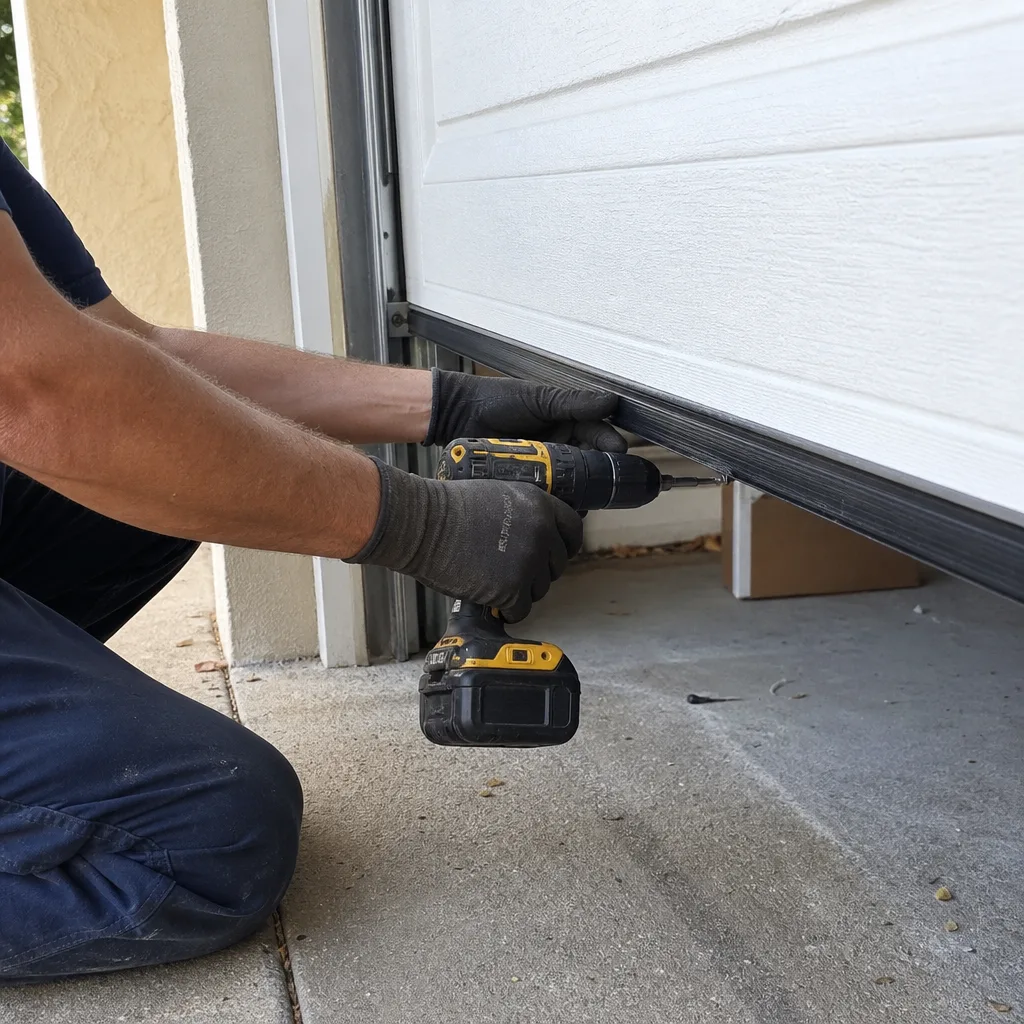
Some garage door work is genuinely DIY: cleaning photo-eye lenses, tightening a loose hinge bolt, wiping down the door surface, checking the bottom seal for visible gaps. But several situations call for a trained technician. If your torsion spring shows rust pitting or a visible gap at the coil, if your lift cables are frayed anywhere along their length, if your door is off-track, if your opener’s logic board is dead, or if your door fails to reverse when closing on an object, stop using the door and call someone who knows what they’re doing. These are not finish-it-with-a-hammer situations. Servo Garage Doors Hollywood offers free estimates in Hollywood, with a flat written price and written scope delivered before any work starts, per Clause 1 of The Haven Standard. We’ll photograph the failed component before quoting a replacement, per Clause 4. Call (754) 465-7645 for a free estimate.
Frequently Asked Questions
Seasonal garage door maintenance in Hollywood typically runs $150 to $300 per service visit, depending on whether it’s the pre-season hardening inspection (which includes spring, cable, roller, and track checks) or the dry-season opener service. The price is always quoted as a flat written number before any work begins, not an estimate that can drift. For an exact price on your door, call (754) 465-7645 and describe what you’re seeing. Estimates are free.
The salt air, humidity, and storm exposure in Hollywood make twice-yearly service the realistic floor for a door that’s expected to last 15 to 20 years. Pre-season hardening in March-April addresses storm readiness. Dry-season service in January-February addresses opener health and cable wear. If a door gets neither, it typically fails at the worst possible time, which in Hollywood is August through October. Twice a year keeps the door operating predictably and keeps small issues from compounding into big ones. For more guides & resources on keeping your door reliable, see our blog.
You can handle several tasks safely: cleaning photo-eye sensors, tightening accessible hinge and bracket bolts (with the door closed and the opener disconnected), checking the bottom seal for gaps, and lubricating rollers and hinges with a silicone lubricant. You should not attempt torsion spring adjustment, cable replacement, track realignment, or opener force-setting changes. These tasks involve stored energy or precise alignment, and the cost of a mistake is measured in injuries, not dollars. For anything beyond the basics, call a professional.
Hollywood’s combination of Atlantic salt air, extended high humidity, and hurricane wind loads puts more stress on garage door components than almost any coastal US environment. Torsion springs rust faster, cables corrode at the bottom brackets, rollers wear on rusted tracks, and wood doors swell and contract with the humidity cycle. A door in Phoenix faces none of these. Understanding the local environment is why Hollywood-specific maintenance matters.
Check the lift cables for fraying, the rollers for cracks or flat spots, the bottom seal for water intrusion, the track bolts for looseness, and the opener photo-eyes for misalignment. If the door is making a new noise or feels heavier than it was before the storm, those are additional signs that a component took damage. After any named storm in Hollywood, a professional post-storm inspection takes about 30 minutes and gives you a documented record of what was found, not just a spoken opinion.
Ask whether the price is written before work starts. That single question separates companies that inspect and quote honestly from companies that quote low and bill high. At Servo Garage Doors Hollywood, our founding rule is a photographed failure and a written price before any replacement is quoted. We’ve operated that way in Hollywood since 2015, and we document every visit with a photo record so you can see what we saw. Bring us any competing written estimate and we’ll give you a free second opinion.
The Bottom Line
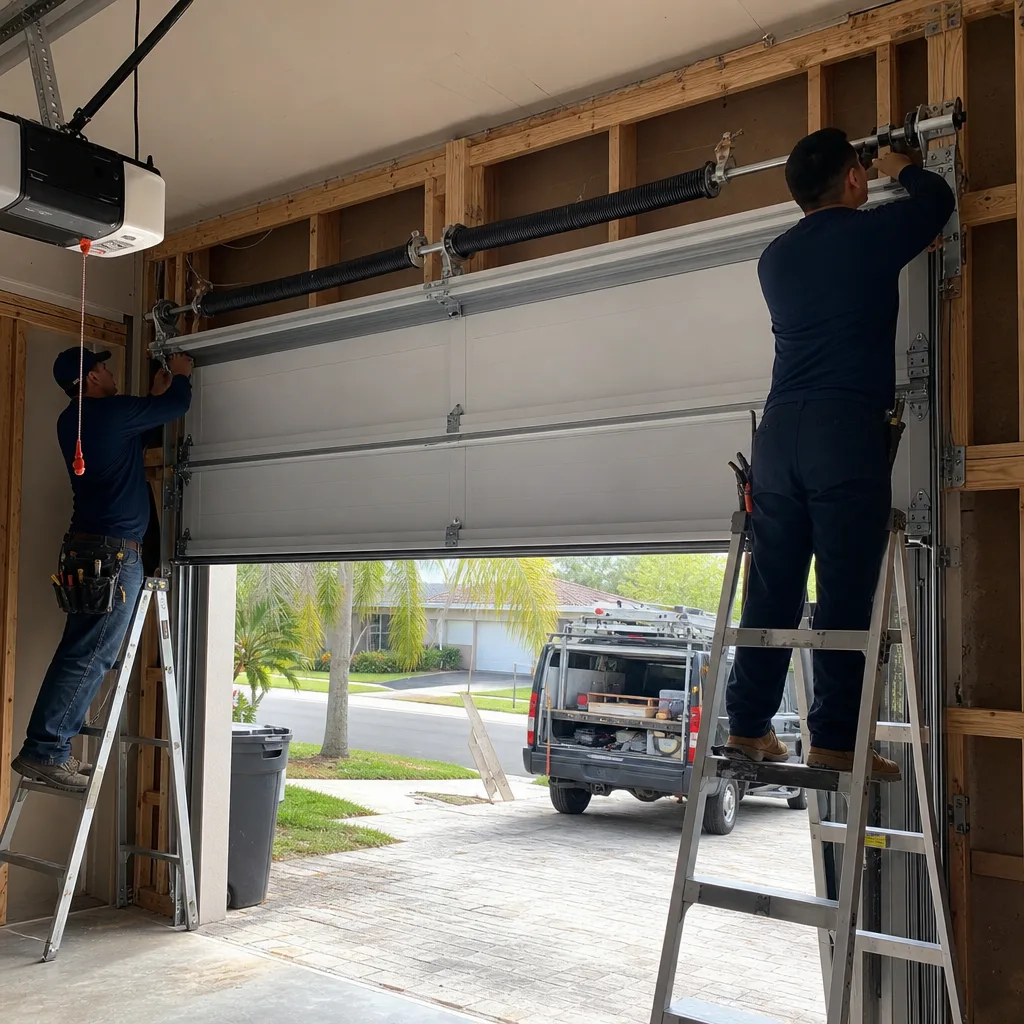
Hollywood garage doors live in a harder environment than most homeowners realize, and the maintenance calendar that fits this city has two real seasons: March-to-April hardening for hurricane season and January-to-February servicing in the dry air. A door that gets a pre-season spring inspection, a post-storm component check, and an annual opener service is a door that opens reliably for 15 years or more. A door that doesn’t is a door that fails in October, when the deferred maintenance from spring and the humidity stress from summer finally converge. The good news is that none of this maintenance is expensive compared to replacing a door or opener, and all of it is schedulable. The bad news is that Hollywood’s climate doesn’t give second chances. Call (754) 465-7645 for a free estimate on seasonal maintenance, and we’ll show you exactly what your door needs before any work begins.
Written by Marcus Deller, Owner at Servo Garage Doors Hollywood, serving Hollywood since 2015.