
Last updated September 20, 2026
Full 25-point door and opener safety check with every visit - springs, cables, rollers, tracks, and your LiftMaster or Chamberlain opener included
You get a price before we start. It does not change when the truck arrives.
 Before
 After
After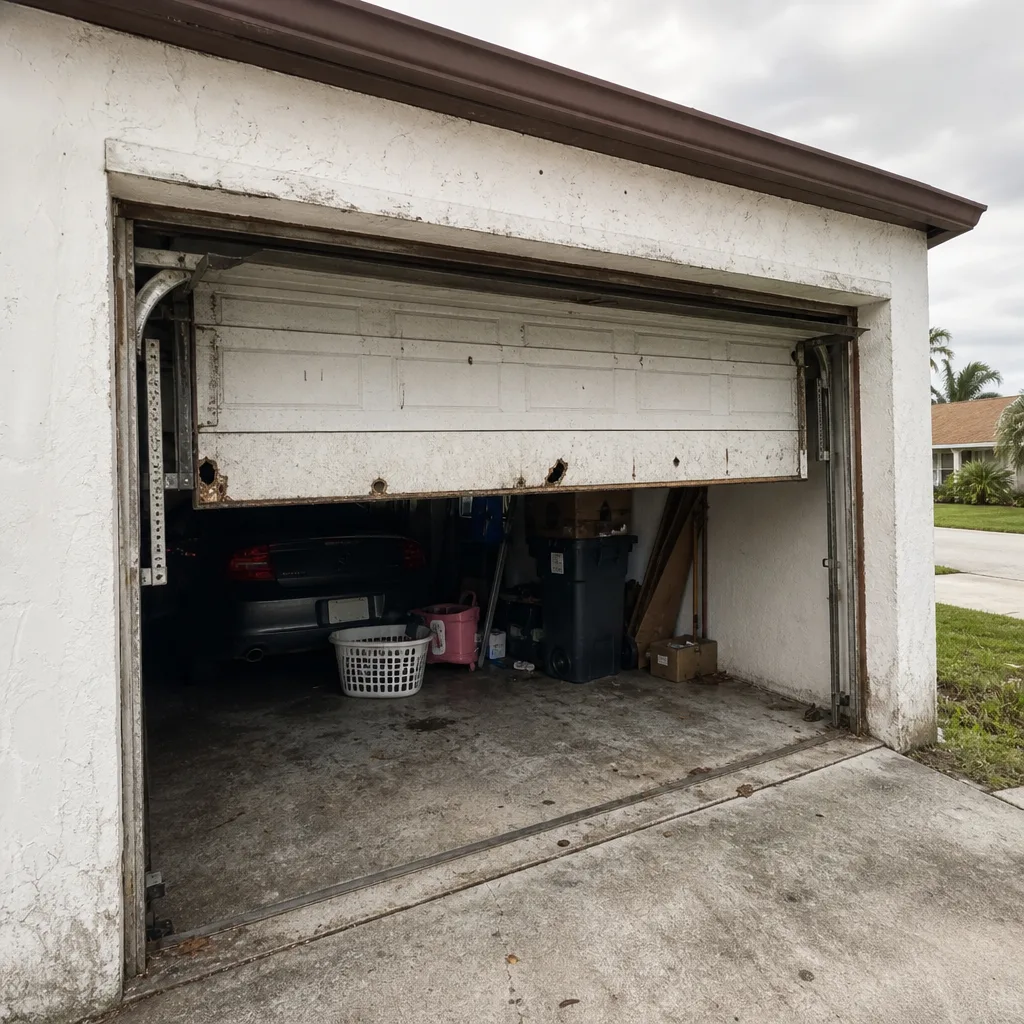 Before
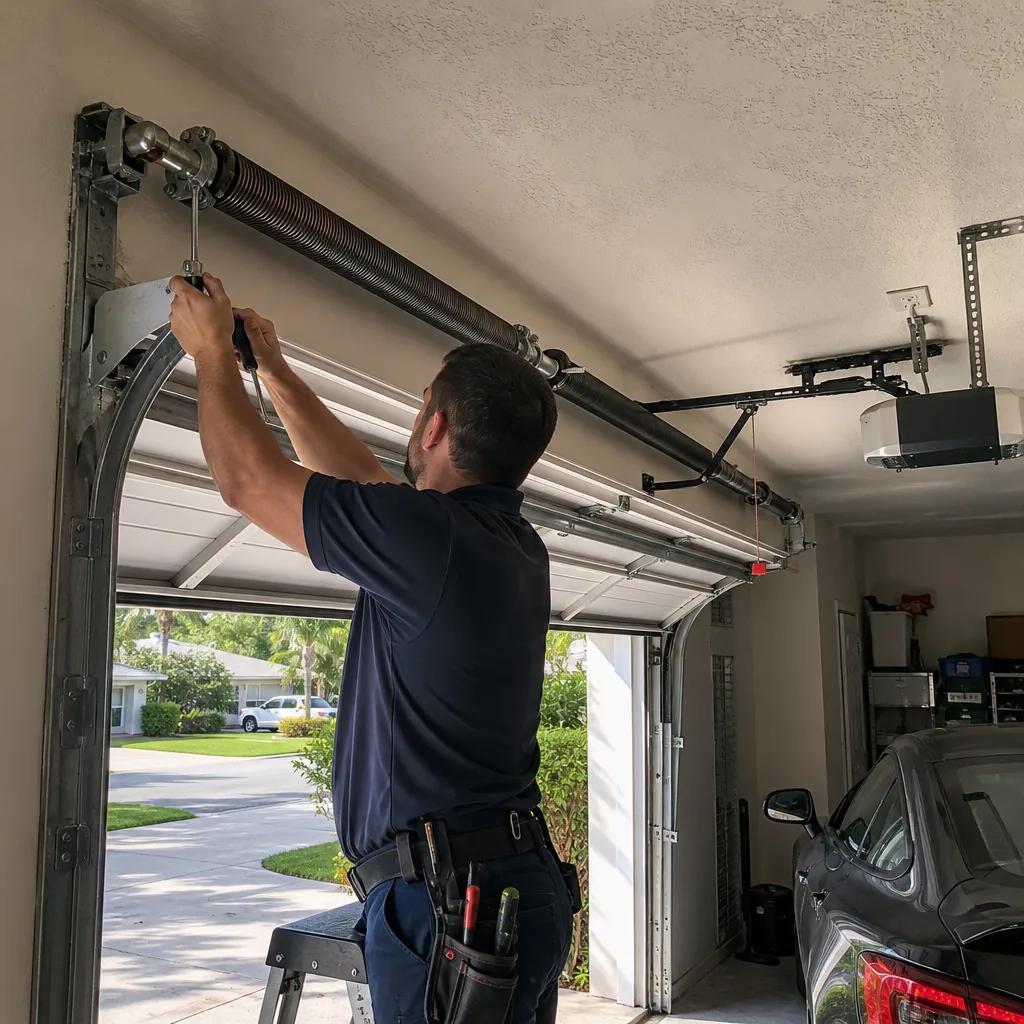 After
After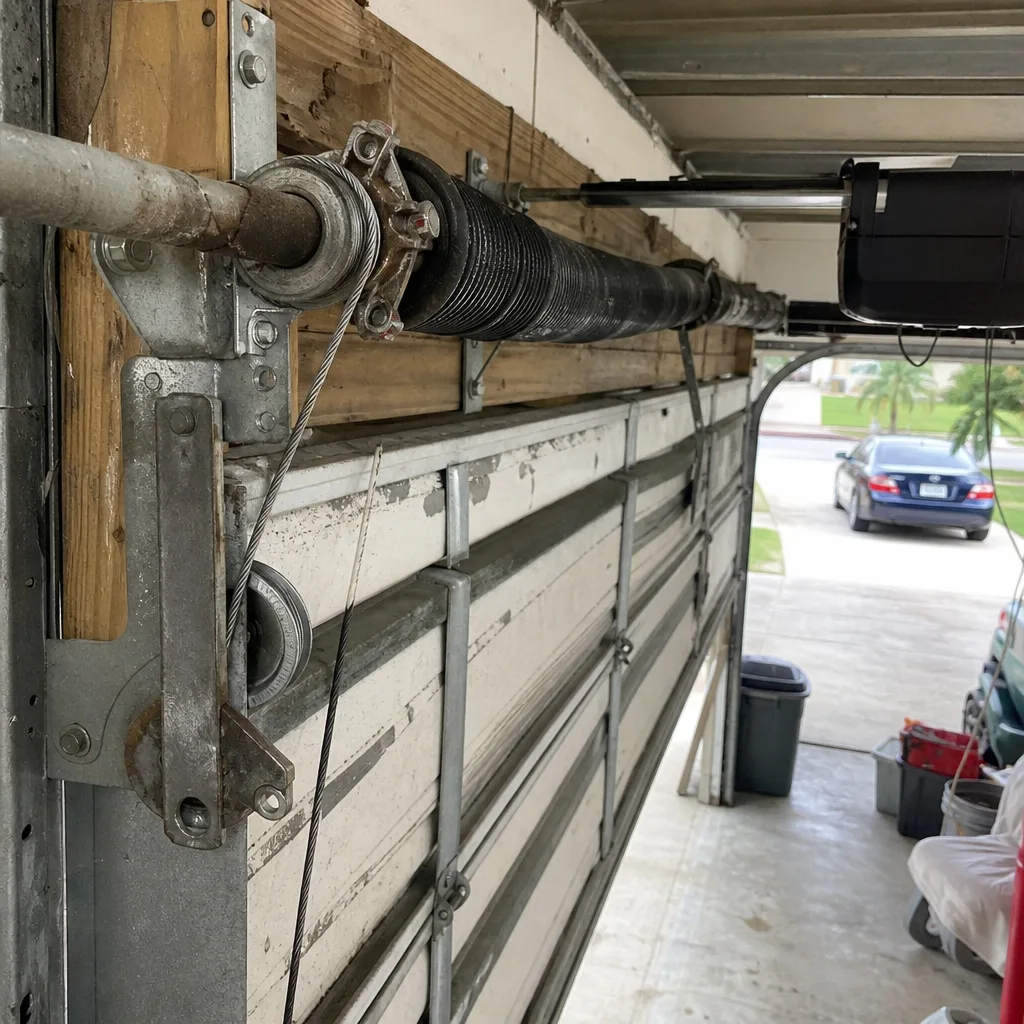 Before
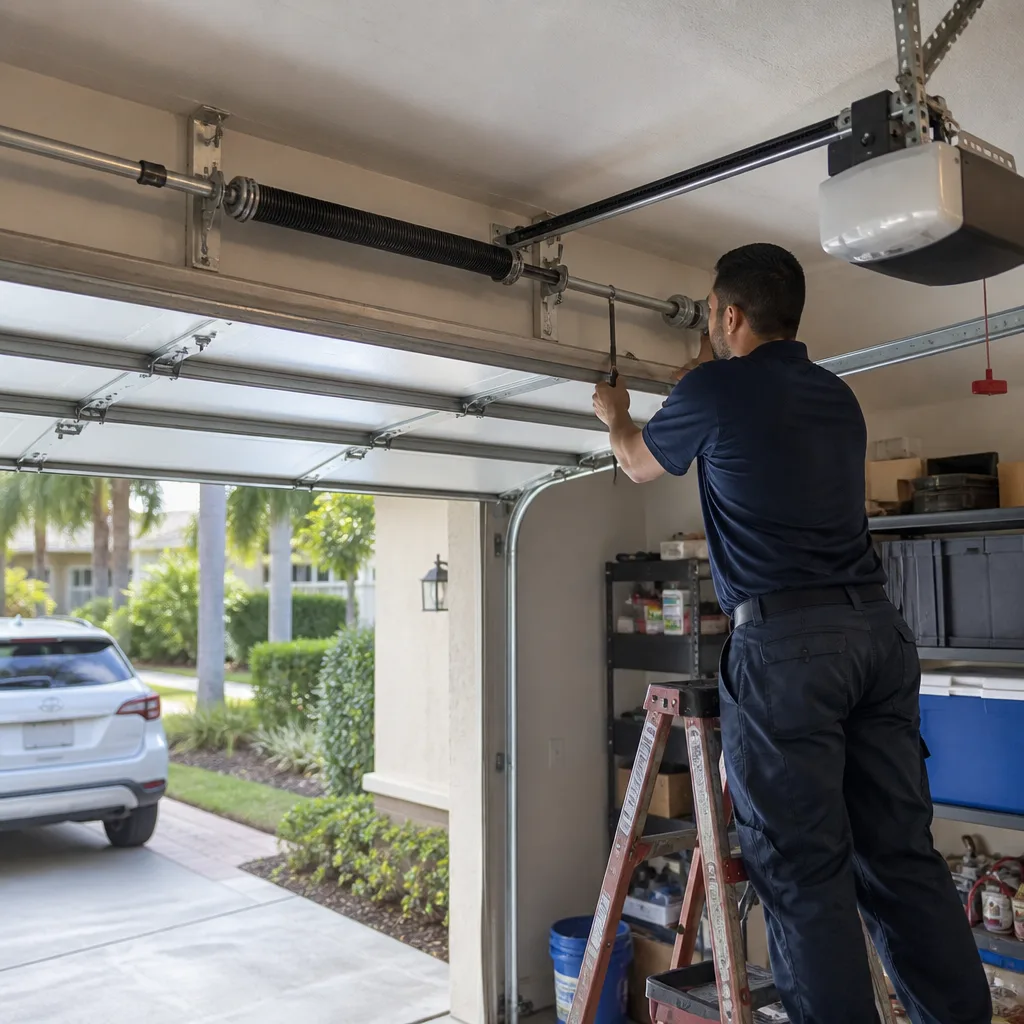 After
AfterGarage Door Permits, Codes & Inspections in FL: What You Need to Know
Most Hollywood homeowners assume a garage door replacement is a simple swap: old door off, new door on. Then the wind comes. Florida Building Code Section 105.1 requires a permit for garage door replacement in nearly every municipality in Broward County, and a door installed without one can void a hurricane damage claim years later. This guide covers exactly when a permit is required, what the inspector checks, how Florida Product Approval numbers work, and what unpermitted work means when you sell your home. For related reading, see our Garage Door Repair Maintenance Checklist for Hollywood Homeowners. We’ve walked through hundreds of these inspections in Hollywood and the surrounding corridor.
Quick Answer
In Florida, replacing a garage door requires a building permit when the door is part of the home’s wind-load resistance system, which covers virtually every attached garage in Broward County. The permit triggers an inspection that verifies the door meets Florida Building Code wind-load requirements for your specific wind zone, and the door must carry a valid Florida Product Approval number. Skipping the permit risks insurance claim denial after a storm and complications when you sell the home.
Table of Contents
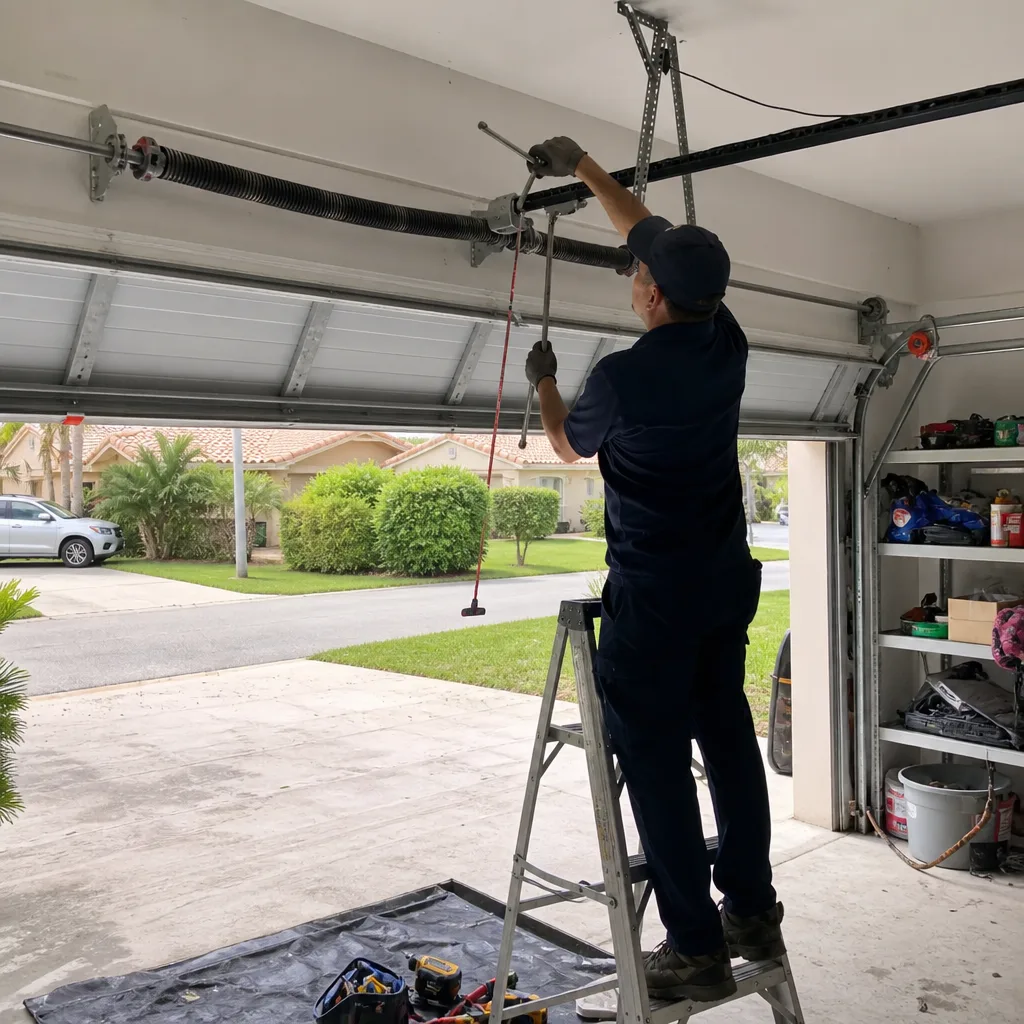
- When a Garage Door Permit Is Required in Florida
- Wind-Load Requirements: What the Code Actually Says
- Florida Product Approval Numbers: What They Are and How to Verify One
- What a Broward County Inspector Checks: The Four-Point Garage Door Inspection
- HOA Approval vs. Municipal Permit: Two Separate Processes
- What Unpermitted Garage Door Work Means for a Home Sale in Hollywood
- The Permit Process Step by Step
- Common Mistakes to Avoid
- When to Call a Professional
- Frequently Asked Questions
- The Bottom Line
BeforeAfterWhen a Garage Door Permit Is Required in Florida
Florida Building Code Section 105.1 is the governing text. It states that a permit is required for any construction or alteration that falls under the code’s scope, and garage door replacement is explicitly included because the door functions as part of the building envelope. The code does not distinguish between a repair and a replacement when the door panel, track system, or hardware is swapped for a new assembly. If the old door comes off the hinges and a new one goes on, you need a permit.
Here is what actually triggers the requirement in Hollywood and most Broward County municipalities:
- Full door replacement: Any time the entire door assembly is removed and replaced, even if the opening size stays identical. The permit verifies the new door meets current wind-load standards for your address.
- New openings: Cutting a new garage door opening or enlarging an existing one requires a full structural permit, not just a door permit, because you are altering load-bearing wall framing.
- Track and hardware replacement: Replacing the tracks, hinges, and mounting brackets alongside a panel replacement folds into the same permit. The inspector verifies the anchoring system matches the wind-load requirements.
- Storm-rated upgrades: If you are upgrading to a wind-rated door after an insurance company directive, the permit documents that upgrade. Insurance carriers in Florida frequently ask for this paperwork after a claim or a policy renewal inspection.
One exception worth knowing: repairing a door panel in place, replacing rollers, or swapping a spring does not typically require a permit because the door assembly itself is not being replaced. A broken torsion spring is a repair, not an installation. However, if the damage is severe enough that the entire door is taken down and a new one is installed, the permit threshold is crossed. We see this distinction matter most after hurricane damage in Hollywood, where a storm-damaged door might look repairable at first glance but ends up needing full replacement once the wind-load integrity is assessed. Learn to spot trouble early with our Garage Door Warning Signs: A Hollywood Homeowner’s Reference Guide.
Wind-Load Requirements: What the Code Actually Says
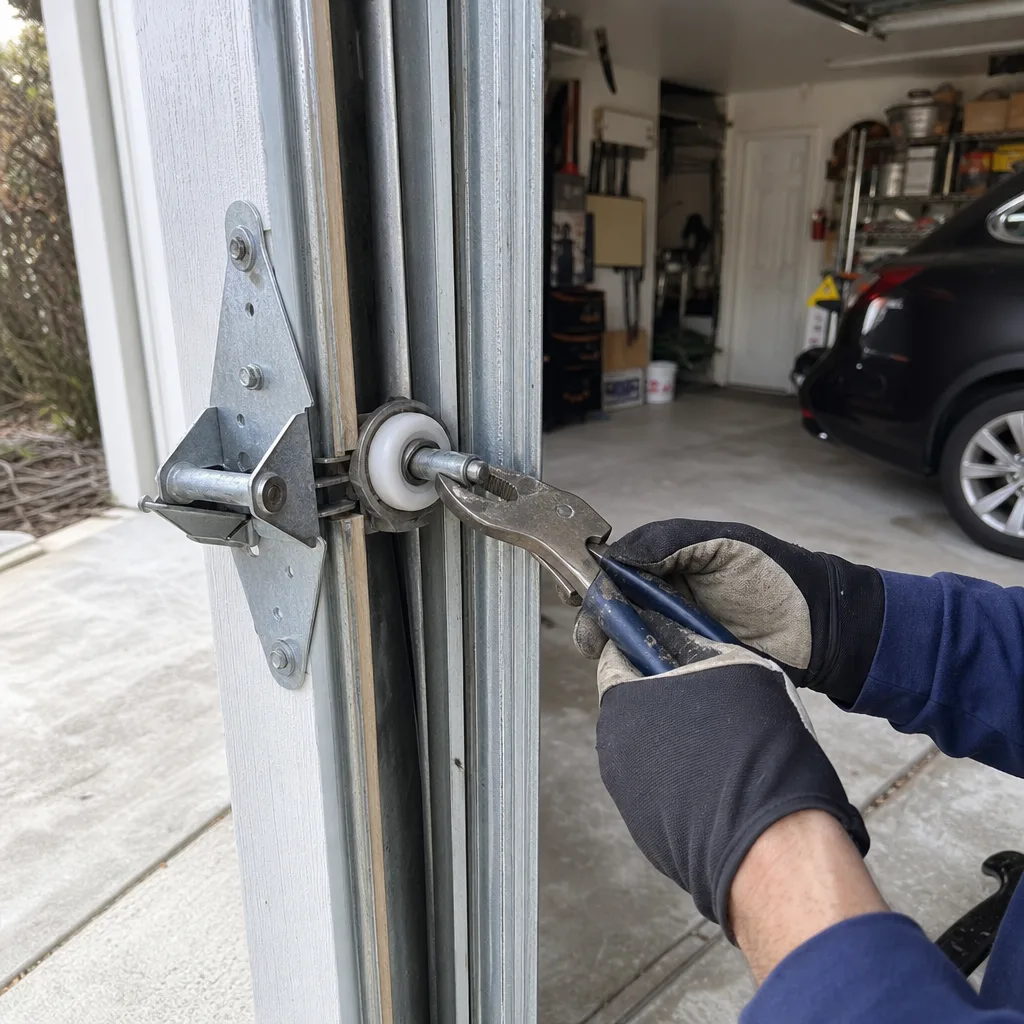
Florida Building Code section R301.2 assigns every address in Florida a wind speed rating based on its location. Hollywood falls within a high-velocity hurricane zone for wind-load purposes, which means garage doors here must resist specific uplift and impact pressures that doors in, say, central Florida do not. The code reference is the basis for every garage door inspection in Broward County.
The key table is R301.2(2), which maps wind speeds to structural requirements. For Hollywood addresses, the design wind speed typically falls in the 170 to 180 mph range depending on the exact parcel and exposure category. Exposure categories matter: a home on an open lot near the Intracoastal has a different exposure rating than a home tucked into a dense inland neighborhood like Emerald Hills or Hollywood Lakes. The inspector checks that the door’s wind-load rating matches the exposure category for that specific address, not just the general city rating.
What this means in practical terms:
- Doors are tested as complete assemblies. You cannot pair a wind-rated panel with non-rated tracks and call it compliant. The Florida Product Approval covers the full system: panels, tracks, hinges, and the anchoring hardware bolted to the jamb.
- Anchoring is the failure point. Most failed wind-load inspections we see in Hollywood involve fasteners. The code specifies bolt size, spacing, and embedment depth into the concrete or wood jamb. A door with the right panel and the wrong anchors fails.
- Reinforced doors need reinforcing hardware. A hurricane-rated door requires vertical reinforcement struts on the interior face, not just a heavier panel. The inspector looks for those struts on wide doors, typically anything over 10 feet wide, because the wind pressure on a large panel can bow the door without them.
If you are buying a home in Hollywood and the garage door was replaced after 2002, the wind-load documentation should be in the closing package. If it is not, that is a red flag worth chasing before you sign. A garage door installation in Hollywood done correctly includes the permit record and the product approval paperwork handed to the homeowner at the end of the job.
Florida Product Approval Numbers: What They Are and How to Verify One
Every garage door sold and installed in Florida after 2002 must carry a Florida Product Approval number issued by the Florida Building Commission. This number, formatted like “FL12345,” proves the door model was tested to meet Florida’s wind-load standards and is legal for installation in a high-velocity hurricane zone. Without it, a door cannot be pulled for a permit in Hollywood, period.
The approval is product-specific, not brand-generic. A Wayne Dalton model that carries an approval does not mean every Wayne Dalton door is approved. The approval number ties to a specific model, a specific wind pressure rating, and often a specific size range tested in the lab.
How to verify a Florida Product Approval number:
- Ask for the number before the door is ordered. Any installer pulling a permit in Broward County needs this number on the permit application. If the installer hesitates or says they will “handle it later,” the door may not be approved for Florida at all.
- Look it up on the Florida Department of Business and Professional Regulation website. The DBPR maintains a searchable database of active Florida Product Approvals. Enter the number and confirm the product description matches the door being quoted.
- Check the expiration and revision date. Product approvals can be revised or suspended. The approval on file must be current at the time of installation, not current when the door was manufactured.
- Match the size and wind-load rating to your opening. Some approvals cover a narrow size band. A door approved for a 9-foot-wide opening is not automatically approved for a 16-foot-wide double door.
We quote the Florida Product Approval number on the written scope we provide before any work starts. It is not hidden in a permit packet. The customer sees it on the estimate, because that number is what allows the door to be legally installed in Hollywood at all.
What a Broward County Inspector Checks: The Four-Point Garage Door Inspection
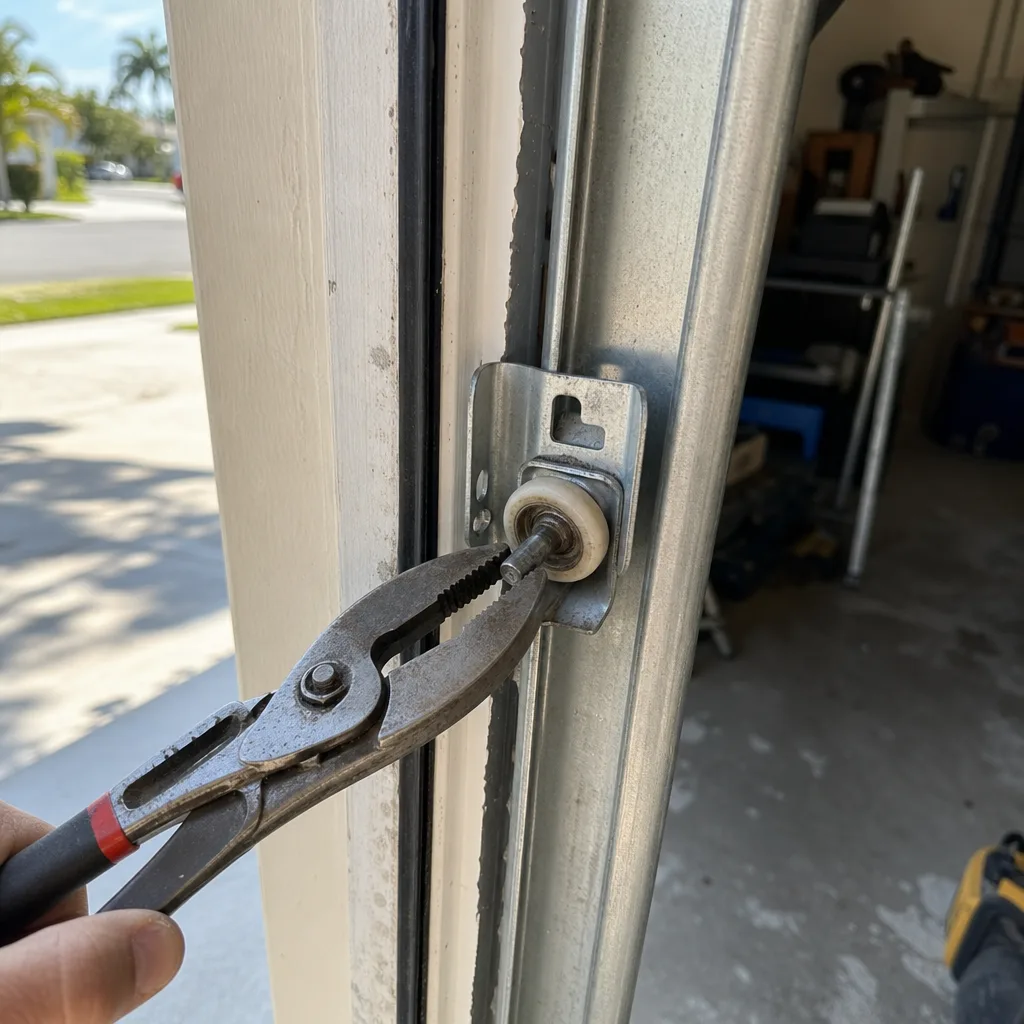
When the permit is pulled and the door is installed, the county inspector arrives to verify the installation matches the approved plans and the product approval documentation. A garage door inspection in Hollywood is not a glancing walkthrough. The inspector checks specific test points, and a failure on any one of them means a correction notice and a re-inspection fee.
Here are the four test points that must pass:
- Product approval match. The inspector verifies the door on the wall matches the Florida Product Approval listed on the permit. This includes the manufacturer name, model, and size. If the installer substituted a different door than the one permitted, the inspection fails on the spot.
- Anchoring and fastener verification. The inspector looks at the fasteners connecting the track brackets to the jamb. The code specifies size, spacing, and penetration. On concrete jambs, this means specific tapcon or sleeve anchor requirements. On wood jambs, specific lag screw depth. Undersized or over-spaced fasteners are the single most common failure we see.
- Wind-load reinforcement hardware. For doors requiring vertical reinforcement struts, the inspector confirms they are installed at the factory-specified intervals on the interior face of the door. Failing to install reinforcement struts on a wide door means the door works fine on a calm day but cannot meet its wind-load rating in a storm.
- Label verification. The inspector confirms the door carries a permanent label or embossing showing the manufacturer, model, and Florida Product Approval number. This label must be visible on the installed door. A missing label means the inspector cannot verify the door is the approved product, and the inspection stops there.
In our experience in Hollywood, the inspection itself takes maybe 15 minutes when the documentation is correct and the installation was done to spec. When it fails, it fails because a shortcut was taken during anchoring or the wrong door was installed. Those failures are avoidable, and a good installer knows the test points before the door goes up.
HOA Approval vs. Municipal Permit: Two Separate Processes
Hollywood has a significant number of HOA-governed communities, from the high-rises along the Intracoastal to the gated subdivisions inland. A common misunderstanding is that HOA approval for a garage door design satisfies the city permit requirement, or that the city permit satisfies the HOA. Neither is true. These are parallel processes, and failing one does not excuse the other.
Here is how they differ:
- HOA approval governs appearance. The HOA cares about door style, color, material, and sometimes brand. An HOA may restrict doors to specific colors or require a certain panel design to match the community’s architectural standard. This has nothing to do with wind-load safety.
- The municipal permit governs safety and code compliance. The city of Hollywood cares about wind-load ratings, anchoring, product approvals, and structural integrity. The inspector does not care if the door is white or beige.
- Timing runs in parallel. A homeowner needs HOA approval before ordering a door with any aesthetic restrictions, and needs the product approval number to file the municipal permit. Work typically starts after both are in hand.
- Neither approval implies the other. An HOA that approves a door does not mean the city permit is granted. A city permit does not mean the HOA’s design review board has signed off. In some Hollywood communities, installing a door without HOA approval can trigger fines and a forced replacement at the homeowner’s expense, even if the city inspection passes.
When we install in an HOA community, we ask for the HOA’s written approval before ordering the door. The permit is handled separately with the municipality. The two processes never merge into one.
What Unpermitted Garage Door Work Means for a Home Sale in Hollywood
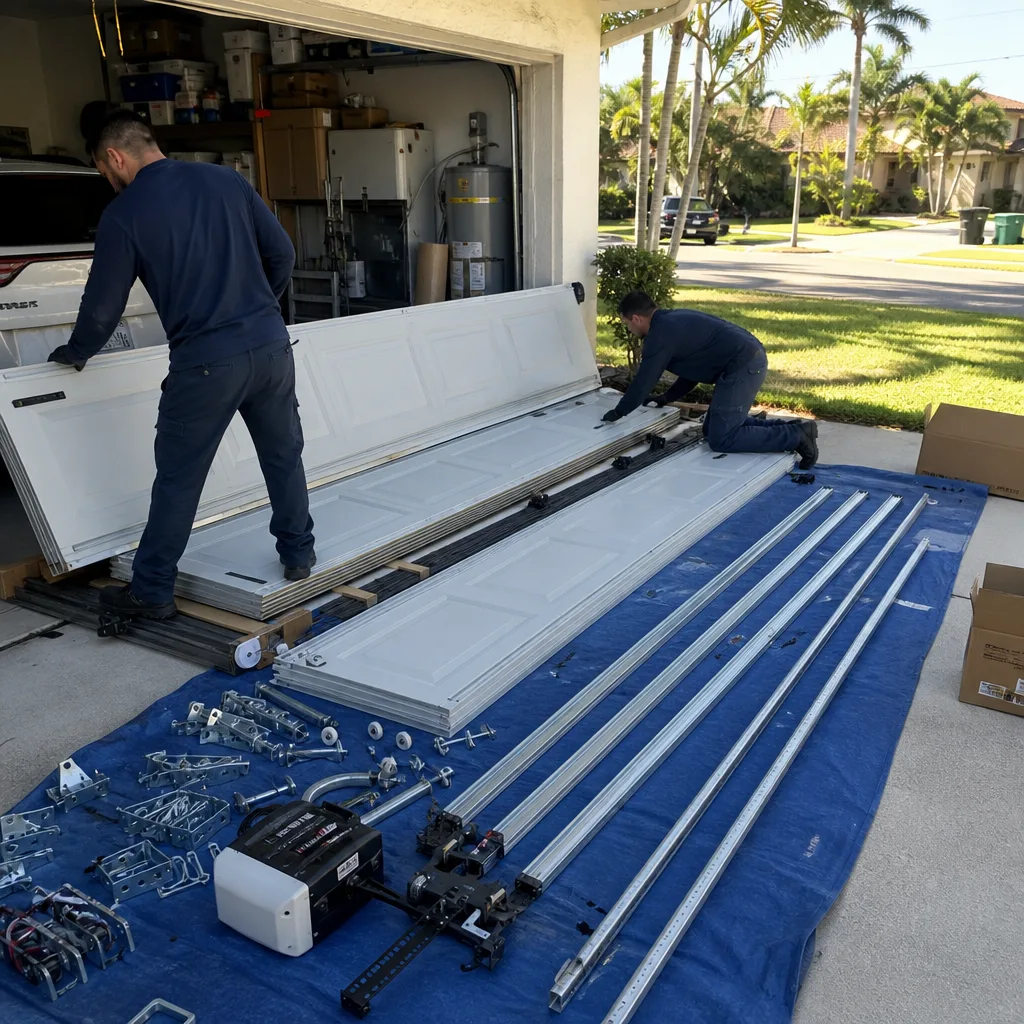
Unpermitted garage door replacement surfaces during a home sale in a specific document: the four-point inspection. Florida insurance carriers require four-point inspections on homes over a certain age before issuing or renewing a homeowners policy. The four points are roof, electrical, plumbing, and HVAC. The garage door falls under the roof inspection in most inspectors’ reports because the door is part of the wind-load envelope.
What happens next depends on what the inspector finds:
- A door with no permit record gets flagged. The four-point inspector notes that the door appears newer than the permit history shows, or simply that no permit record exists. The insurance carrier then asks for documentation: permit, product approval, installation record. Without it, the policy can be denied or the premium loaded.
- Remediation is not cheap. To clear an unpermitted door, the homeowner must pull an after-the-fact permit, which requires an inspection of the installed door against current code. If the door does not meet code, it must be replaced. The cost of the permit, the inspection, and potentially a new door lands on the seller, typically at the worst possible time in the negotiation.
- Buyers walk. In a market like Hollywood, where buyers are already sensitive to insurance costs, an unpermitted garage door is a deal-breaker. It signals other shortcuts may be hidden. We have seen buyers cancel contracts over exactly this issue.
- Claim denial is the worst case. If a hurricane damages the door and the insurance carrier discovers the replacement was unpermitted, the claim can be denied because the unpermitted work violated the policy’s requirement that modifications comply with local building codes. This is not hypothetical. It is a clause that gets exercised.
The cost of pulling a permit in Hollywood is a fraction of the cost of remediation after the fact. If you are not sure whether your door was permitted, the city’s building department can pull the permit history for your address. You can also browse more guides & resources on our blog. It is a phone call that takes ten minutes and tells you where you stand.
The Permit Process Step by Step
Here is the full sequence for a garage door replacement in Hollywood, from the first phone call to the final inspection sign-off. This assumes the door is a like-for-like replacement with no structural changes to the opening.
- Measure and document the existing door. The installer records the opening width, height, jamb material, and current door condition. This determines the wind-load exposure and the product approval required.
- Select a Florida-approved door. The door model must carry a valid Florida Product Approval covering the specific size and wind-load rating for the Hollywood address. This is not optional. A door without a valid approval cannot be permitted in Broward County.
- File the permit application with the city. The application includes the product approval number, the door specifications, the anchoring details, and the contractor’s license information. In Hollywood, this filing is handled electronically through the city’s online portal.
- Install the door to the approved specifications. The anchoring, track hardware, and reinforcement struts must match what was permitted. Any deviation means the inspection fails.
- Schedule the inspection. Once the door is installed, the inspection is scheduled with the city. The inspector verifies the four test points outlined above.
- Receive the final approval and documentation. When the inspection passes, the homeowner receives the permit record and the product approval documentation. Keep these. They are the paper trail that protects you in a sale or an insurance claim.
A note on timing: a like-for-like replacement permit is typically issued quickly, sometimes within a few days in Hollywood. But the inspection cannot be scheduled until the door is physically installed. Do not let anyone tell you the inspection happens before the door goes up. That is not how the process works.
Common Mistakes to Avoid
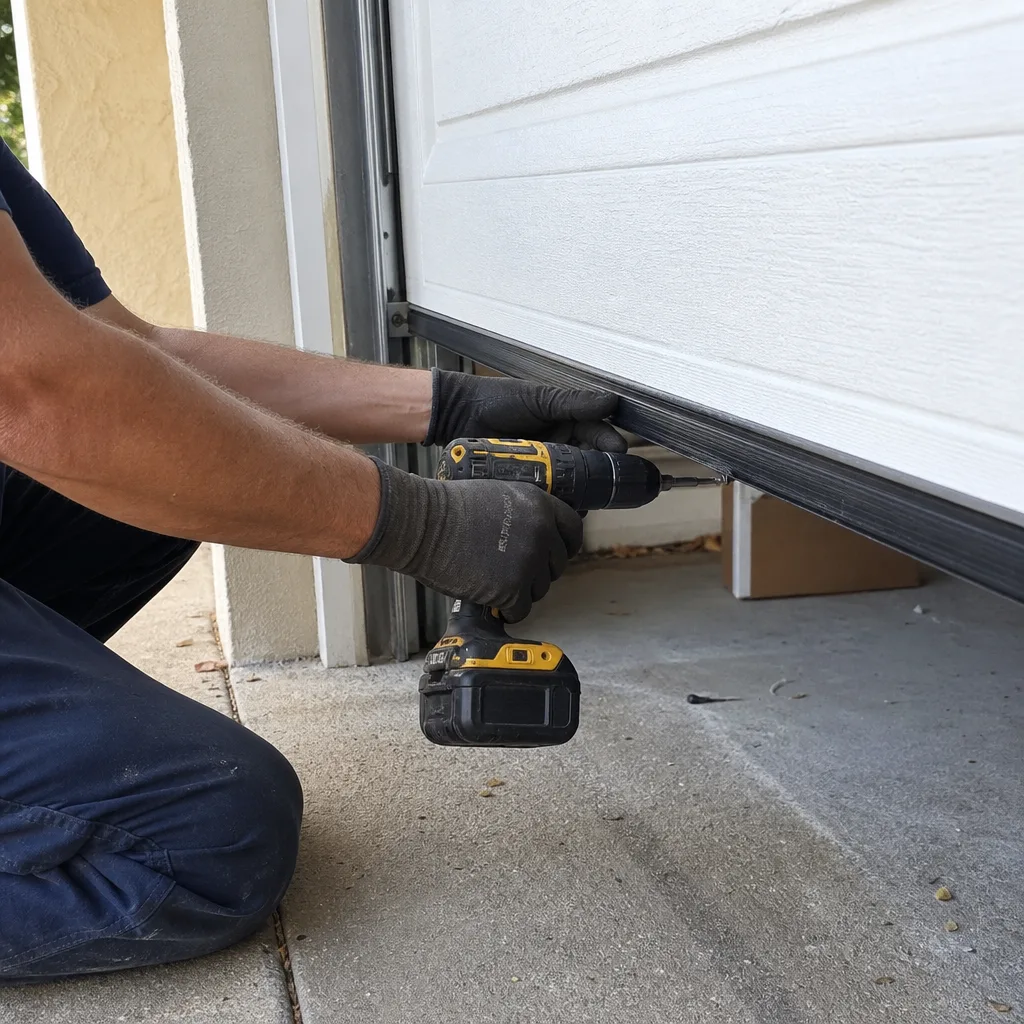
Here are the mistakes we see repeatedly in Hollywood garage door projects, and what each one costs.
- Assuming a repair quote means no permit. The permit trigger is replacement, not the size of the job. If the door comes off and a new assembly goes on, the permit applies. A contractor who says otherwise is not doing you a favor.
- Buying a door online without a Florida Product Approval. Big-box retailers and online sellers sometimes list doors that look right but do not carry a valid Florida approval. If the number is not on the product page, do not buy it for a Broward County address.
- Pairing a wind-rated panel with off-the-shelf hardware. The door is a system. A rated panel on unrated tracks with undersized fasteners is not compliant and will not pass inspection.
- Confusing HOA approval with a permit. They are separate, they run in parallel, and neither satisfies the other. Getting one does not mean the other is granted.
- Letting the installer “handle the paperwork later.” The permit is filed before the door goes up, not after. If the installer suggests skipping the permit to save time or money, you are accepting the liability for that decision.
- Losing the paperwork after the job. The permit record and the product approval documentation are part of your home’s file. Keep them with your closing documents. You will need them for a sale or an insurance claim years later.
- Replacing a door without checking the wind-load rating for the specific address. Hollywood has exposure variations depending on lot location. A door rated for a protected inland lot may be under-rated for a home near the Intracoastal. The approval must match the exposure category.
When to Call a Professional
Garage door replacement in Hollywood is not a handyman job. The wind-load requirements, the anchoring specifications, and the permit paperwork all require working knowledge of Florida Building Code and the local inspection process. Call a professional if you are replacing a full door assembly, if a four-point inspection flagged your existing door, if you are buying or selling a home with a recently replaced door and no permit record, or if your insurance carrier has asked for wind-load documentation. Garage Door Repair in Hollywood from Servo covers the full scope, including permit filing and inspection coordination. Servo Garage Doors Hollywood offers free estimates in Hollywood - call (754) 465-7645.
Frequently Asked Questions
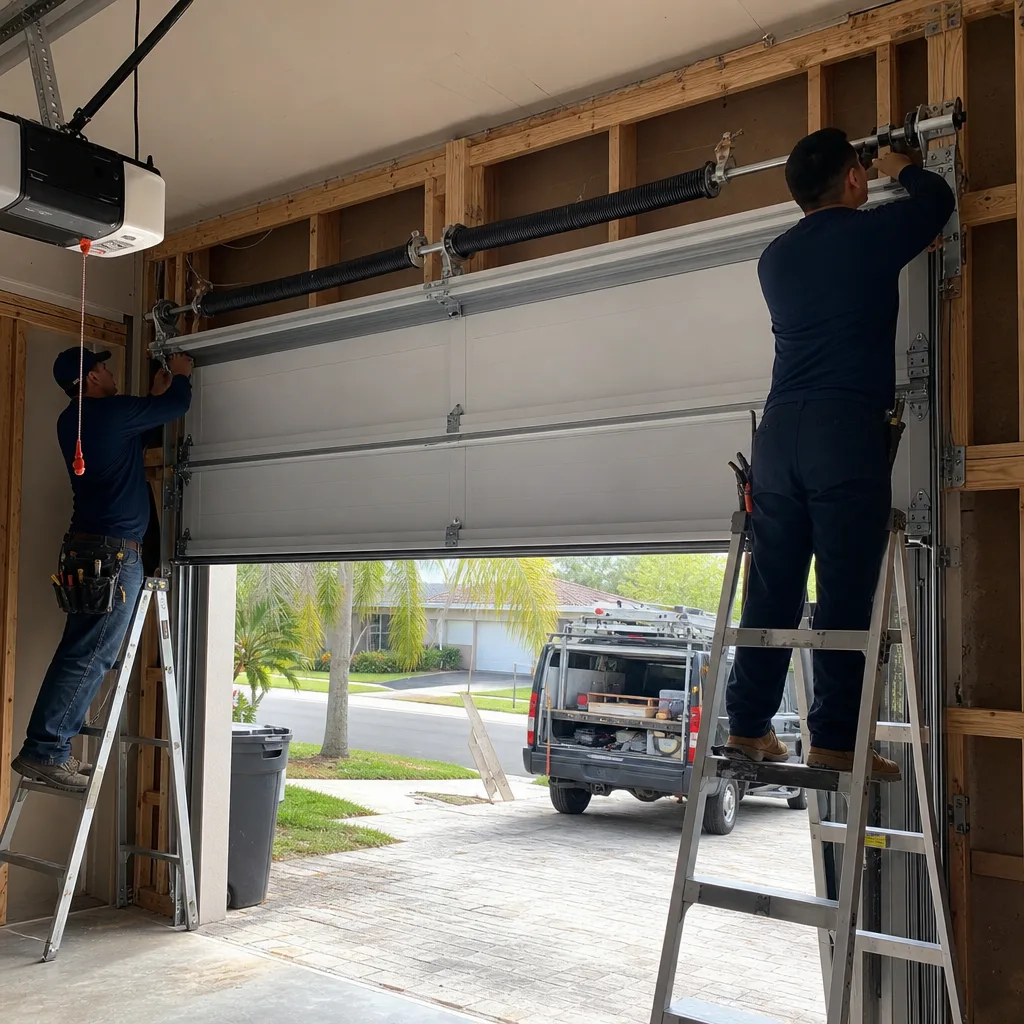
Yes. Florida Building Code Section 105.1 requires a permit for garage door replacement when the door is part of the home’s wind-load resistance system, which covers nearly every attached garage in Broward County including Hollywood. The permit verifies the new door meets current wind-load standards for your specific address.
Permit fees in Hollywood vary by the value of the door and the specific scope of work, but homeowners should expect a few hundred dollars in total for the permit fee and inspection when the door is a like-for-like replacement. The cost is small compared to the expense of remediating unpermitted work later. We include the permit cost in the written estimate we provide before any work starts, so the price on the page is the price you pay.
The unpermitted door creates liability in three places: your insurance carrier can deny a claim for wind damage because the work violated your policy’s code-compliance clause, a four-point inspection during a home sale will flag the missing permit record, and the city can require an after-the-fact permit with an inspection against current code. If the installed door fails that inspection, it must be replaced.
A Florida Product Approval number is a certification issued by the Florida Building Commission that proves a specific garage door model has been tested and approved for wind-load resistance in Florida. The number must be on the permit application and verifiable in the state’s product approval database before a door can be legally installed in Hollywood.
No. HOA approval governs the appearance of the door, and the municipal permit governs the code compliance of the door. They are separate processes that run in parallel, and failing either one creates a separate problem. An HOA-approved door still needs a permit, and a permitted door still needs HOA approval if your Hollywood community requires it.
Replacing a garage door opener alone typically does not require a building permit under Florida Building Code Section 105.1 because the opener is an appliance, not part of the structural envelope. However, if the opener replacement involves new structural anchoring or the door itself is being replaced at the same time, the permit threshold is crossed. A garage door opener repair in Hollywood that stays inside the existing mounting points does not trigger a permit.
The Bottom Line
Florida garage door permits are not optional paperwork. They are the mechanism that verifies your door will hold up to a hurricane and that your insurance company will stand behind it if it does not. The permit requirement is triggered by replacement, the inspection checks specific wind-load test points, and the Florida Product Approval number is the document that makes the whole system work. In Hollywood, the cost of doing it right is a rounding error compared to the cost of discovering the paperwork is missing when you need it most. Servo Garage Doors Hollywood home handles the permit, the product approval, and the inspection, and every job is quoted with a flat, written price before any work starts. Call (754) 465-7645 for a free estimate.
Written by Marcus Deller, Owner at Servo Garage Doors Hollywood, serving Hollywood since 2015.